
All Saints Sunday, Nov. 1, 2026
1 John 3:1-3
Matthew 5:1-12
Last week one of our youth asked me, “What does God look like?” I was taken with the genuine curiosity embedded in that question and also with the obvious–of course we want to have some tangible insight into what we can’t see–or think we can’t see. In his famous fresco painting, “The Creation of Adam,” Michelangelo painted an image of God that I think most westerners have carried around for over 500 years. So many people now think God looks like an old white dude with long gray hair and a beard who is still in very good shape.
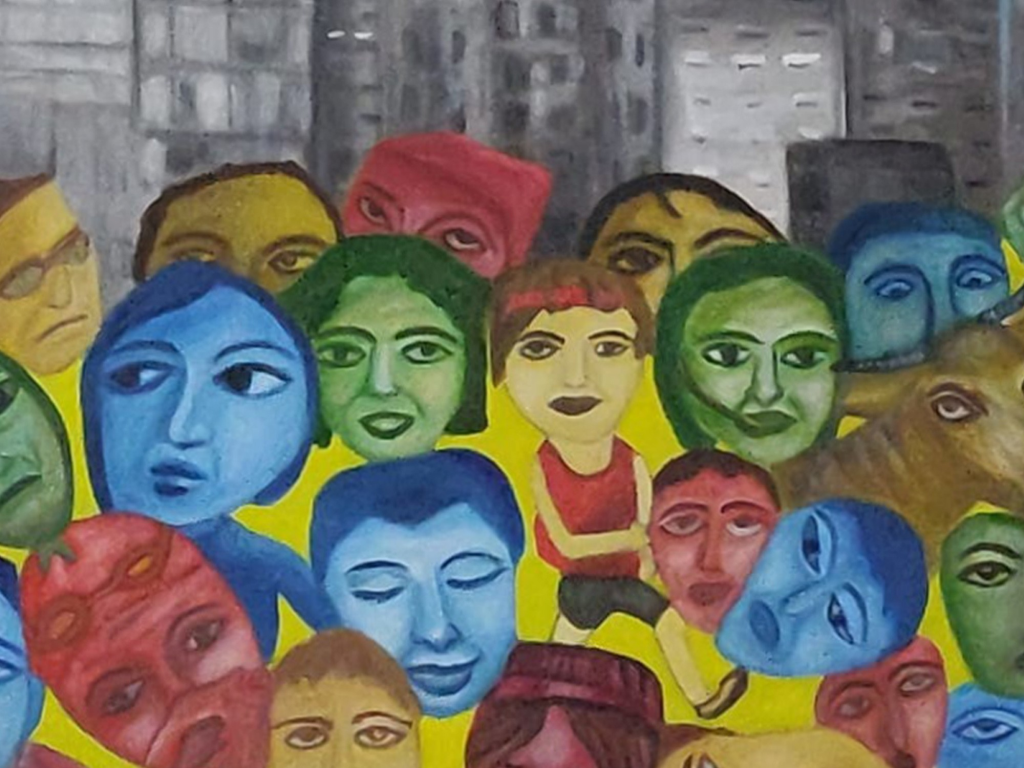
So I answered the question with what I believe the scriptures, our tradition, and the experience of God tell me. God looks like you and me. God looks like the man that stands on the corner of Brodie and Slaughter with his dog every single day. God looks like the man I visited last month in hospice down the street. God looks like the immigrant, the grocery store clerk, the security guard at the bank, the veteran, the CEO of an oil company, a woman in a wheelchair, a teenager with schizophrenia. That’s the lesson St. Francis learned when he recognized Jesus walking towards him in the body of a leper.
Because we, all of humanity, are made in the image of God. In the very first Chapter of Genesis God speaks and says, “Let us make humanity in our image…so, God created humanity in God’s own image, in the divine image God created them.” It was good and it is all the beauty of holiness.
All Saints Day is a celebration for remembering that we are indeed children of God, that we take the time to really see each other, look into each other’s eyes, and know, despite what outward appearances or irritating behavior may lead you to believe, God has created this person through the creative love that made the world and all that is in it. Big time famous folk whose extraordinary faith we have heard about, have their own Saints’ Days. And if you really read their biographies, they were not without their own failures and irritating behavior, too.
Yet this day we celebrate is for the saints sitting here in these pews and those ordinary, unrecognized, or unrealized saints, who have already passed into the fullness of the Kingdom of God, all souls and all saints. They have gone back to the garden, a journey we are still on ourselves here in this earthly realm. This gift of God’s love, created in God’s image, reminds us about our relationship with the family of God. All Saints’ Day is a time when as the family of faith, children of God and joint heirs with Christ, we not only bear each other’s burdens but also claim for those who have died the hope and confidence we have together in the risen Christ.
Our legacy as children of God is to remember that, even though our loved ones have died, through their love and compassion, their instruction and correction, their laughter and tears, their honesty and humility, their sacrifice and dedication, and, most of all, their faith, known and unknown, they are still speaking. William Penn wrote at the death of a beloved member of his family, “Those who love beyond this world are never separated.” Then he added, “Death cannot kill what never dies.” Our legacy is the gift of God’s love, present in this life and present victoriously in the life to come.1
John writes that the reason the world does not know this love, cannot recognize God in others or in itself, is that it doesn’t know God. You may remember the story I’ve told before when the old Navajo grandmother once told me, “You know why it is so hard for you Christians out here? Because you came to tell us about God’s Son but it is so obvious to us that you don’t know God, so how can you know his Son?” A good start on knowing God, is to know you are created in the image of the Creator, that part of the great commandment that Jesus pointed out–Love yourself. You’ll never love your neighbor or the stranger until you grasp some part of that. We are not to reject what God loves, and that includes you as well as the stranger.
“See what love the Father has given us, that we should be called children of God: and that is what we are,” John writes to his community in Ephesus. How many of us could comfortably look in the mirror and say with certainty, “I am a child of God! I am beloved!” Try it. It feels cringy at first, but that’s because I am afraid we don’t believe it. I’m afraid we don’t really love ourselves. Yet we believe all the other negative talk which we repeat over and over in our minds, so why not try the same repetition of claiming your belovedness? Every time you hear yourself say, “I can’t believe I was so stupid!” or “I don’t like my body!” or “What is wrong with me?!” try countering with, “And yet I am a beloved child of God.” You are already worthy of it–it’s a gift of love given to you since the beginning of time and your creation.
Jesus is present to us in the bread and wine, because we need something we can taste and see and touch. Yet Jesus is also present to us everywhere as guide and comforter through the Holy Spirit. Through prayer and meditation, in that stillness, we encounter God within us. We meet Christ as God in this inner experience of the heart, as that famous Benedictine monk and mystic Bede Griffiths would say. And there it is! God is within you, the Creator has created you from Godself. It might be hidden at times, and others at times some may even deny it its presence, but it is there. You are Imago Dei.
You are the “Imago Dei,” the fancy Latin term for image of God. It is a blessing you already have. “I am blessed,” we sometimes say when someone asks how we are. That is true, but too often we tend to look around us and it’s easy to conclude that the “blessed” are the rich, happy, strong, satisfied, ruthless, deceptive, aggressive, safe, and well-liked — and yet here’s Jesus, laying it out in his most famous sermon on the Mount that pretty much sums up Christianity, saying that despite appearances, the truly “blessed” are actually the poor, mourning, gentle, hungry, merciful, pure in heart, peacemaking, persecuted, and reviled.
The Beatitudes are not a “how to” manual. Many Christians have distorted the Beatitudes into a litany of religious “shoulds,” when in fact it’s essentially a litany of “congratulations,” a map of who is truly blessed, not a set of instructions about how to acquire God’s blessing in the first place. While the world sees the successful, the rich, and the powerful, God sees the hidden, the marginalized, and the invisible. God sees our hearts.
Jesus is hardly recommending that his listeners go and create conditions of mourning or persecution for themselves! Rather, he’s delivering good news of consolation and assurance to those already in mourning or persecution, or those who, through no efforts of their own, find themselves in such circumstances later on. Remember: Jesus is preaching to crowds largely made up of the sick, the afflicted, and those who care for them. He’s saying, in effect, The world may not regard you as blessed (quite the contrary!), but in truth, you are the blessed ones! God’s reign of heaven turns the world upside down — and that world-turning reign is at hand!2 Jesus does not issue “Thou shalts.” He is talking about what already is.
How different might this world be if we kept our baptismal vows close to our hearts and minds that we will respect the dignity of every human being. That dignity inherent in us all is God’s divine spark of your creation. If we remember the blessed ones are often ones we overlook. And from the mouth of the recently departed Delores Huerta, “We must use our lives to make the world a better place, not just acquire things.” This is how we share God’s gift to us of the Imago Dei. If we remember that no one can take away from you what you truly are–a beloved and blessed child of God. What does God look like? God looks like you.

