
8th Sunday After Pentecost,
Proper 11, Year A
Matthew 13:24-30,36-43
July 19, 2026
Well, my fellow farmers! Here we are again in the fields planting seeds. But today I’m going to talk about the weeds. What is a weed anyway? As we learn more about soil conservation and growing plants that are actually native to the region, one discovers that what some folks claim to be weeds are actually very good plants for the earth.
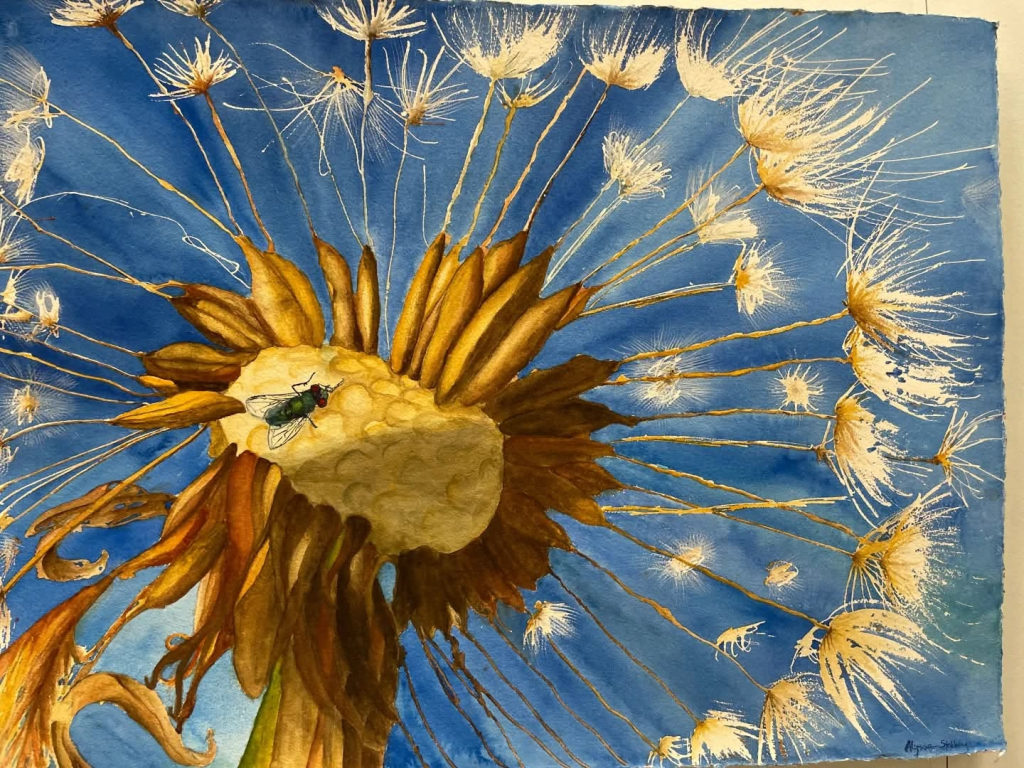
Just look at the much maligned dandelion. I mean every child on the planet is delighted with dandelions. You get such a beautiful, happy yellow flower as if a miniature sun is growing out of the ground and then, like magic, it turns into this ball of fluff where you make a wish and blow the tiny little parachutes away. Is there a more magical weed? And the roots–they go waaaay down and stop erosion and hold the earth together, besides supplying vital nutrients to the soil. Not to mention you can eat the leaves, drink dandelion tea to improve your health, and Elton John even wrote a song about dandelion wine! My point is, do we really know what a weed is? I’m afraid Jesus doesn’t think we do.
In the case of our parable today, the weed mentioned here is specifically called darnel and it is a somewhat poisonous weed which looks very much like wheat during its earliest stages. I’ll concede that darnel does not sound like a good weed. This farmer had planted good wheat and an enemy came in trying to destroy the crop by sowing darnel seeds in with the wheat because they looked so similar. As a result of the resemblance, early separation from the wheat is nearly impossible. Not until it’s close to harvest time can one tell the difference between the two because the wheat will still stand tall in the end but the head of the darnel will droop over. This is further complicated by the fact that the roots of the two intertwine so the risk of harming the other plants is a risk this farmer is not willing to take.
And that’s one of the points Jesus is making in this parable. One often can’t tell what is a weed and what is good grain. And just like the good shepherd who went after one little sheep who was lost when he had so many others, this farmer isn’t willing for any one of his plants to be uprooted as if they didn’t matter.
It was the farmer’s slaves that noticed something wasn’t quite right. The farmer had done his own sowing, but they were questioning if he had planted the right seeds. If the job had been done correctly, they point out, then your crop wouldn’t have weeds in it.
When he tells them an enemy did this to destroy what was good, the workers want to go clean it up for him. Get rid of the weeds, cut out the riff raff, the no good. And the farmer says, no. Let them grow together. I’m willing to take the risk in order to not lose one single stalk of wheat.
We should not overlook this detail in the parable. The farmer’s slaves, like we modern day disciples, are all too eager to help God out and go after the weeds. Uproot them, cast them out. As if God needs us to be God’s police. But we do not have sufficient knowledge to determine what’s a weed and what is good fruit all the time. We can make mistakes in that regard.
Let the weeds grow with the wheat. The kingdom of heaven is like that. When the time comes the evil intentions of the enemy that tried to corrupt the wheat crop will be dealt with by the angels. God will send God’s own messengers to do the cleaning up and burn away that which was meant to harm. Judgment, casting out, determining who or what is good and allowed to remain in God’s kingdom is not at all the work we are to be about.
And I dare say most of us will be quite surprised to find that what we may have been certain was a weed, unacceptable to God, was, in the end, the good wheat which bore fruit. In good faith then we continue to water the whole field. We continue to fertilize the crops. We continue to grow. That is our work. None of it is to be neglected.
Barbara Brown Taylor points out “that growth interests [God] more than perfection and that [God] is willing to risk fat weeds for fat wheat. When we try to help [God] out a little, to improve on the plan, [God] lets us know that our timing is off, not to mention our judgment, and that [God] does, after all, own the field.” Growth interests God more than perfection. So, how is our imperfect garden growing?
All of these parables in Matthew’s Discourse of the Parables are allegories of what the Kingdom of Heaven is like. To use the everyday symbols of planting, agriculture, sheep tending, even baking bread, all are symbols that most of Jesus’ audience would understand first hand. Jesus does not use images of empire and commerce, industry and finance. Jesus uses images of God’s creation, a connection to the earth that people like migrant workers and farmers, even slaves, know intimately. People that know seeds and soil, weeds and wheat.
This parable is told to the whole crowd but only explained to the disciples. Jesus clearly is talking about God’s empire, comparing it to the empires of the world. The presence of God’s empire here on earth coexists with evil and the opposition it provokes, the coming of God’s kingdom, and the adversary who tries to destroy it.
The seed that Jesus sows is the Word, the Logos, the power that evoked all of God’s creation, the Word spoken that created us and is created in us. The Word of hope and salvation from the weeds that entangle us, the weeds of fear that we tend to choke on. Yet the seed that grows in God’s kingdom is creative and life-giving even if growing among weeds. It is the witness to the power of God’s love at work. It cannot be thwarted. It is the ultimate truth that God is love and that love is in the midst of this scrappy field that we might find overwhelming, too daunting and oppressive. It seems like many times the weeds will just take over and snuff out the good wheat. But love promises that the wheat will, at the harvest, survive, and not just survive, but thrive and flourish.
Matthew’s audience when he wrote his Gospel would have heard this parable in a time where the tiny early church was experiencing persecution and oppression. Real persecution that threatened to destroy them. They saw how evil forces and intentions can sneak in like an enemy in the night and plant weeds with the intention of dividing God’s wheat, planting the seeds of destruction with the clear intent to choke the wheat out, to wrap around the roots and claim the field of the Master for their own. This parable was meant to encourage the fledgling church and remind them that no evil can withstand God’s will.
It is that deep love that ties the universe together that also finds every single one of us worthwhile. God will not take the risk for any of the seed to be uprooted by some overzealous disciples who think they can identify the weeds and get rid of them so the crop is kept “pure.”
We are, like the field in the parable, both mixed and messy. Each of us individually, our faith communities corporately, and our world in its entirety, contain wheat and weed, good and evil, the fruitful and the poisonous. Jesus unequivocally says this evil is doomed. Jesus speaks Good News for the world’s most downtrodden, disenfranchised, tormented, wounded, and oppressed. Sending the angels to gather up what is nefarious and burn it is called justice. If there will never be an actual making right for the most victimized among us, then what is the Gospel, and why are we bothering with it? What is the Good News of Christianity?1
Jesus doesn’t deny the grim reality of the here and now, that evil does seem to prevail for a time. People do suffer when the roots of evil entwine them. But the passionate, protective, and deeply righteous love of God will not suffer evil to rule the world forever. Oppression will end. Injustice will die. The wheat will thrive and the weeds will not. “All causes of evil and all evildoers,” Jesus says here in his explanation to the disciples, will be exposed and disempowered. All causes of evil. The causes we condemn in others, and the causes we complacently excuse in ourselves.2 Love will prevail.
And in that sure and certain hope, we plant seeds, we nurture the entire field so that this seed will grow and mature, recognizing that God takes the risk of us growing with the weeds, both external and internal, allowing the plants every opportunity to mature and produce good fruit. Each grain has purpose and value, so no, let the weeds grow. You never know, some might even be dandelions.
- Debie Thomas. “Let Them Grow Together,” https://journeywithjesus.net/essays/2694-let-them-grow-together. 12 July 2020. ↩︎
- Ibid. ↩︎
 Magdalena's Musings