
Last Sunday after the Epiphany
Feb. 15, 2026
2 Peter 1:16-21
Matthew 17:1-9
I think you all know by now that I am a mountain girl by heart. I love mountains and this Sunday’s scripture readings bring us mountains. I could not be more delighted! You may well understand “mountain top” experiences if you have ever lived through the arduous work of climbing a 14,000 foot mountain, endured the blisters, the thirst, the weather, the body aches and pains, and questioning your sanity much of the way, only to arrive at the top and gasp in awe at seeing the world below you in its breathtaking beauty. The thrill that you actually made it, adds to this experience and how it transforms you–body, mind, and soul.
Our Gospel reading is short this week, but it is such a profound message as we head into Lent. In the previous Chapter, chapter 16, Jesus had asked his disciples “Who do people say that I am?” After some of them mumble, “uh Moses? Elijah?” Peter declares, “You are the Messiah, the Son of the living God.” Immediately following Peter’s confession, Jesus begins to prepare them that they are soon going to head to Jerusalem where Jesus will die.
Peter is not at all ok with that and in perfect Peter bravado he responds with, “Never!” to which Jesus rebukes him harshly. He tells his disciples, “If any wish to come after me, let them deny themselves and take up their cross and follow me. For those who want to save their life will lose it, and those who lose their life for my sake will find it.” Following Jesus just got a little more confusing and difficult. Things were not going according to expectations.
So, six days later, Jesus tells Peter, James, and John, let’s go mountain climbing! After the hard message Jesus had just shared, I’m sure the disciples were feeling a bit confused and depressed. They had given up everything for Jesus. They go but I can just imagine that they are thinking, “What now?”
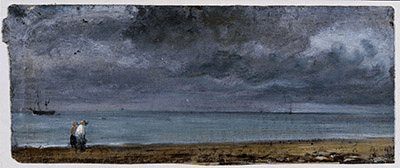
Once on the mountain they encounter clouds. How many of you remember lying on the ground looking up at clouds? Playing the game of what do you see in the cloud? An angel? An animal? A person? We have long been captivated by clouds and the shapes they make.
Clouds and mountains. The mountain provides the ground, stability under our feet. The top of the mountain invokes awe and wonder. Yet clouds are ephemeral. They don’t stay the same like the mountain. Gerard Manley Hopkins, the English Victorian poet and Jesuit priest, wrote a lot about clouds in his journal in his first year of his priestly training. Clouds seemed to be the best medium he had for exploring his faith and his doubt, his wonder and his horror at both the presence and the hiddenness of God. 1
Like the mountain, clouds can be beautiful and whimsical, but also frightening and dangerous. Moses climbed a mountain out of obedience to God–who told him to go up the mountain because God wanted to meet with him there. Elijah was also told to go on the mountain to find God. So it’s interesting that here they appear together on the mountain to speak with Jesus, an actual encounter with God. And the three disciples are witnesses to this.
On this last day of Epiphany, before we enter into Lent, we have the last light of the illumination of Christ. Jesus is transfigured, transformed into light itself in front of the disciples. This illumination occurs before Moses and Elijah show up as if it’s a beacon, an invitation to them in the heavens. Moses and Elijah find him on that mountaintop where the veil is pulled back and heaven meets earth for a minute. And on top of that mountain there is suddenly a burst of light! A cloud that glows. Think of the sun as it hits the clouds at sunset and creates that ring of bright light shining through the water droplets and how it radiates.
All through Epiphany we have been reading the scriptures that reveal who Jesus was and is–the epiphany that illuminates the Son of God. And on this last Sunday, not only is he illuminated and transfigured, we see that Jesus truly is Light itself. Jesus is the Light of the world.
The disciples don’t seem to be afraid yet. The climb up the mountain was hard, but they did it. They witness Jesus’ otherworldly change in his being. The strange appearance of Moses and Elijah might be confusing, but Peter, at least, seems somewhat excited. But when the bright cloud interrupted Peter, surrounding them all in a fog, and they heard the voice of God, that scared them so badly it knocked them to their knees. The voice of God who seemed to say STOP TALKING, listen! “This is my Son, the Beloved; with him I am well pleased; listen to him!”
The voice of God can be a still small voice that Elijah encountered or it can be a force of nature that shakes a mountain. There they laid, afraid, shaken, and trembling. And even in that terrible force, more power in a voice than a human can handle, Jesus’ response is to come over to them and touch them, to offer comfort, and say once again a phrase he has repeated over and over, “Don’t be afraid.” And when all the visions are gone, the clouds disappear, the light dims, Jesus is still there, “C’mon, get up. It’s okay. Don’t be afraid. I am here.”
“These untutored, down–to–earth men and women who left everything and followed him, hardly knowing why— these same persons, later, knew that they had been drawn to him because, for all his obvious humanity, something radiated from him that spoke of ineffable and eternal truth. Some of them remembered, when he had left them, one incident in particular when this radiance seemed to manifest itself … visibly.”2
And Peter, who witnessed all this, writes to the church in what is probably the last letter to be included in the canon of the Bible, “You will do well to be attentive to this as to a lamp shining in a dark place, until the day dawns and the morning star rises in your hearts.”
Peter wanted to build some tents, a church perhaps, to house the holy ones and to stay on top of the mountain in the inner circle. We, too, want to build a safe sanctuary away from the world, to be content in the moment, saving Jesus and ourselves from the heartache to come.
But Jesus and the disciples will have to leave the top of the mountain, the veil between heaven and earth closes again and Moses and Elijah are no longer seen, because now they must begin their journey down the mountain. A pilgrimage to the cross. Yet what God has revealed to them on that mountain is to go with them. The Light that lightens the way, the light that guides, the light that comforts and says, “Don’t be afraid, I am with you.” A light that shines in darkness, a light that makes the clouds glow. A transfiguration, a metamorphosis, where they have been transformed themselves.
This transformation, the light received on a mountaintop, will guide and carry these disciples through their darkest times. That encounter for Jesus, where heaven kissed the earth and the veil was temporarily drawn back, will give Jesus the courage to walk to Jerusalem, to resist the temptation to retaliate in violence against his enemies, be willing to die at the hands of the governing authorities, to be able to pray, “Father forgive them for they know not what they do,” to die for love of the world, to give the redemptive and liberating power of God for all.
The transfiguration offers the disciples the paradox that while there is nothing they can do to save themselves from suffering, there is also no way they can shield themselves from the light of God that sheds hope in their darkest moments. The mountain was the way for God to prepare a human band of companions for the sacred journey, to offer something to hold onto when they descend into the crushing reality of the world below.3
This transfiguration story is as much for us as it was for Peter, James, and John. Peter writes to the church “so we have the prophetic message more fully confirmed,” so that we will allow ourselves to be transformed so that morning star will rise in our hearts. Because we all have to come down from the mountain. We will walk through Lent in a time of lament, a time when God may seem hidden from us in the clouds, a time when we may feel terribly afraid, of the world and of God, possibly at the same time. Yet “this is God’s Son, the Beloved; listen to him!”
This path that leads to the cross is ultimately the path to resurrection. God prepares people in the transcendent encounters of our lives to endure the world below, the world of the cross, the world that has the ability to break us and yet is never beyond God’s redemption. These encounters happen on mountaintops with a blinding light for some. For most, they happen in the ordinary moments of our classrooms, work spaces, and soup kitchens—any place where we make a space for the Holy to be present.4
Hold that light in you, hold it tight. Do not be afraid for Christ goes with you, always our companion on the mountain, in the confusion and wonder of clouds, and in the dark valleys, even in the shadow of death. Your transformation is the Christ you carry in you. Hold on to the amazement of mountains and clouds, even on the way to the cross. Because our stories do not end there. 5
- Amy Frykholm. https://journeywithjesus.net/lectionary-essays/current-essay ↩︎
- Douglas John Hall. Feasting on the Word, Year A. ↩︎
- MARYETTA MADELEINE ANSCHUTZ. Festing on the Word, Year A. ↩︎
- Ibid. ↩︎
 Magdalena's Musings