
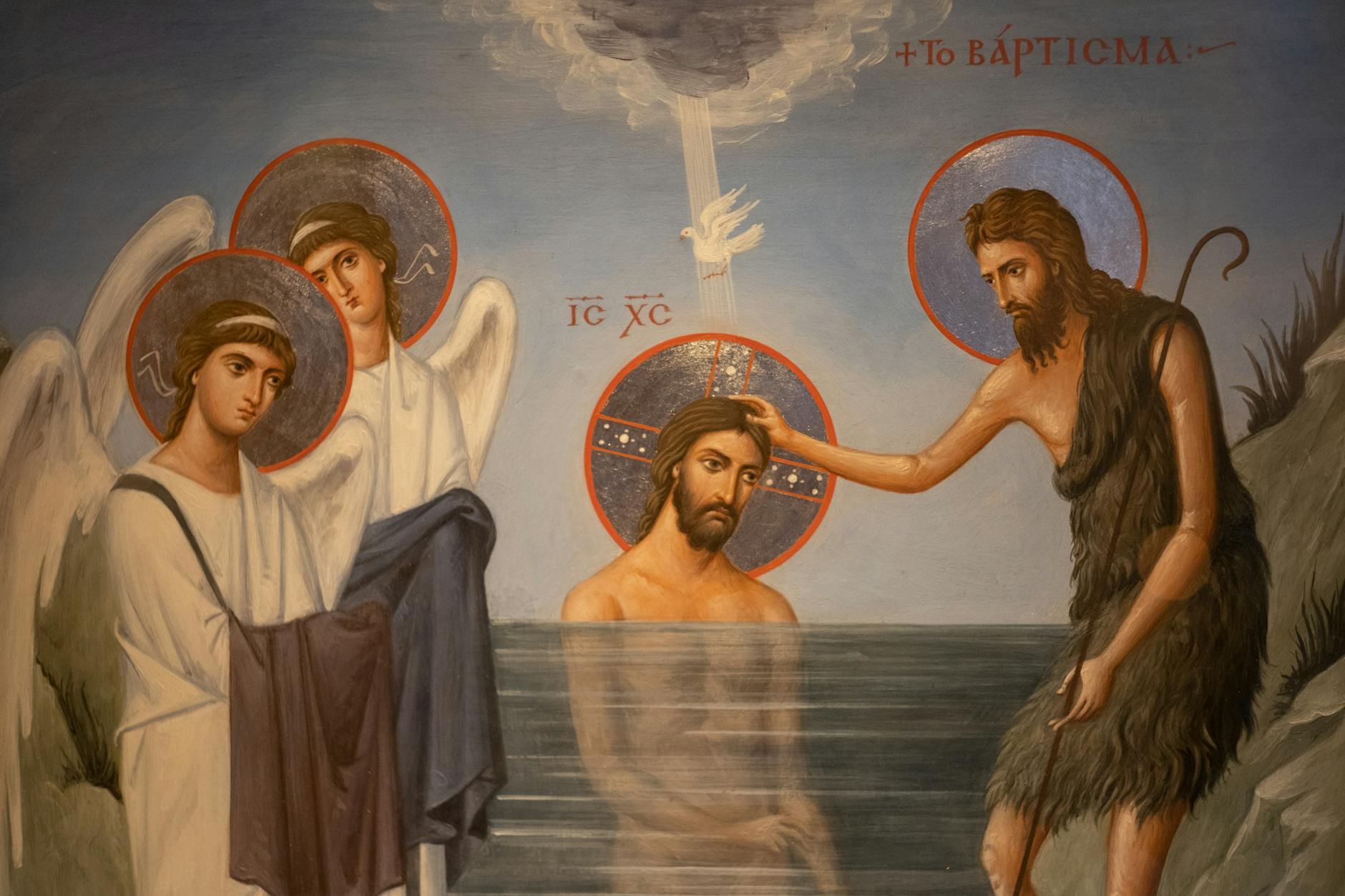
Baptism of the Lord
January 11, 2026
Psalm 29, Matthew 3:13-17
I don’t know if you noticed, but I certainly did when I was reading the scriptures for today to prepare to write my sermon, particularly with the psalm and Gospel, there were so many voices! I thought to myself, I could title the sermon, “I hear voices!”
But seriously, look at Psalm 29, The voice of the LORD is powerful, The voice of the LORD flashes, The voice of the LORD shakes the wilderness, and it goes on. A voice is heard at the river Jordan when Jesus is baptized. The first voice the psalmist mentions is the voice of the LORD is over the waters. That voice echoes back to Genesis when God spoke and began creating in the void. The voice that was spoken in the beginning now speaks when John baptizes Jesus. A voice from the heavens said, “This is my Son, the Beloved, with whom I am well pleased.” Jesus is initiated by water and the spirit to begin his ministry on earth. And so the real story begins.
Now a few verses before this scene in Matthew, where Jesus just showed up at the Jordan, John had explained to his followers that his baptism was a baptism of repentance, which makes things a little awkward when you think about it. Jesus needs to repent? Many a biblical scholar over the centuries have scratched their heads over this, and it seems so has Matthew. He realized his audience needs him to address it. For the early church, Jesus’ baptism was an acute embarrassment. What scandalized the Gospel writers was not the miraculous, but the ordinary. Doves and voices? All well and good — but the Messiah placing himself under the tutelage of a rabble-rouser like John? God’s incarnate Son receiving a baptism of repentance? Perfect, untouchable Jesus? What was he doing in that murky water, aligning himself with the great unwashed? And why did God the Father choose that sordid moment to part the clouds and call his Son beloved?1
Matthew is the evangelist who doesn’t shy away from the relationship with John and Jesus, beyond them being cousins. When Jesus appeared on the banks of the Jordan, no one knew who he was, but they sure knew John. John was quite popular and had a large following. While many later began to follow Jesus, until John was arrested and beheaded, John continued in ministry with others alongside him.
The inclusion of Jesus’ baptism at the launch of his ministry, sheds light early on as to the kind of leader and teacher Jesus was going to be. John is taken aback at Jesus’ request to be baptized. He is in awe and aware of the unequal relationship. John may not have known fully about Jesus’ purpose and being, but he knew enough. Matthew includes this intimate exchange between the two cousins. Probably both boys had grown up with the stories their mothers told them about the voices they had heard and the messages those angelic voices had spoken over their unborn sons.
Maybe Jesus is already teaching John and those gathered at the river about humility and servanthood. Jesus starts off at one with the people being baptized, part of the crowd. This was his humanity and humility. Jesus went through an initiation, too. The Spirit’s descent then zooms in on Jesus and reveals his status as Son of God, and marks him out from the rest of the people even while establishing his solidarity with them.2
Jesus tells John, we’ve got to go through with this baptism. Let it be so for now, because it is in this way God will fulfill all righteousness. We are about to spend most of the rest of this year looking at what God’s righteousness is, and the lesson begins here.
We will see how Jesus teaches that the righteousness that characterizes the reign of heaven requires more of its members, rather than less. It takes all of us and is not for a select few that are really good at following rules. Meeting the rules can no longer be the point (and perhaps never was), but exceeding them might well be. And the character of this greater righteousness is not about adding demands, or by being more rigorous, but by discerning that righteousness—a synonym for justice—is the nature of Israel’s God. Righteousness is God’s remarkable saving love, above all, and for human beings that means our own righteousness is in keeping with that love.3
Now John was righteous and he knew the rules. He was just following the rules when he initially said “no” to baptizing Jesus. Jesus the Son of God is the one John had foretold as “greater than I,” so of course John knew the rule was to stay in his lane. But Jesus suggests that to follow righteousness something different than rule following must happen. This righteousness will be revealed as mercy is stronger than reward and hope is stronger than despair.
John had been proclaiming the reign of heaven and Jesus’ baptism creates that connection with the Divine. “And when Jesus had been baptized, just as he came up from the water, suddenly the heavens were opened to him and he saw God’s Spirit descending like a dove and alighting on him. And a voice from the heavens said, ‘This is my Son, the Beloved, with whom I am well pleased.’” It might seem odd, but this baptism needed to happen. In the very fact of his submission to John it shows us something about “righteousness,” about the reign of heaven, and about what it really means to be the beloved Son of God.
Jesus doesn’t make righteousness happen by adhering to a script that must be followed. Jesus’ submission to John creates a solidarity with all of us who are to participate in bringing about the reign of heaven. Jesus is showing what the reign of heaven is throughout his ministry and teaching–that the reign of heaven is–righteousness. Justice. Righteousness, justice, is God’s saving mercy. To fulfill all righteousness for Jesus will not end here, but it begins here.
And in 2026 we continue that solidarity by remembering our baptismal vows. We are to actively be participating in preparing for the reign of heaven. It is by our baptismal vows that we are all equally initiated into ministry, into righteousness. Our business here is ministry. You are a minister of Christ and are Christ’s Body–his hands and feet. My ordination as a priest is a vocation to a certain role in Christ’s Church, but we are all equal in being initiated into ministry by our baptism. You are ministers. A ministry, not of self-righteous rule following, following instructions, and meeting demands, but a righteousness of justice, of mercy, of humble service, and most importantly of love–love of God and love of neighbor.
Jesus himself meets us in the waters of baptism. He’s the one who opens the barrier, and shows us the God we long for. He’s the one who stands in line with us at the water’s edge, willing to immerse himself in shame, scandal, repentance, and pain — all so that we might hear the only Voice that can tell us who we are and whose we are in this sacred season. It is the voice that will guide you, perhaps convince you that you are worthy, to be ministers of the Gospel. Listen. We are God’s own. God’s children. God’s pleasure. Even in the deepest water, even in our most unlikeliest of circumstances, listen to the voice that tells you–you are Beloved.
 Magdalena's Musings