
17th Sunday after Pentecost
Proper 22
Oct. 5, 2025
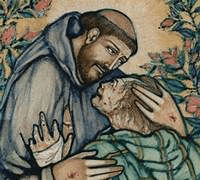
The story is told of Saint Francis of Assisi going down to a village with one his monks. Their purpose was to preach the Gospel. When they arrived at the village they quickly engaged the local folk in conversation and passed their time helping the villagers with their work, sharing stories, entering into the life of the community. As the end of the day drew near, Francis said to one of his companions that it was time for them to return to the monastery. They were about to make their way out of the village, when Francis’ companion, with great concern, said, “Didn’t we come here to preach the Gospel to these people? When are we going to do that?” Francis turned to his brother monk and said, “If these people have not heard the Gospel today, then reading from the Bible will not make any difference to them!” And so they went on their way.
Today we are celebrating the Feast Day of this blessed saint whose witness to the love of Christ still speaks to us 800 years later. Like many indigenous peoples, Francis saw God in all created things as holy and sacred. As a young man, he was not at all very religious nor had any regard for Jesus. In fact, he was quite the party boy. But God had other plans and through a variety of means which caused Francis to face his own biases and privilege, God got his attention. And as God worked in his heart, through illness and imprisonment, Francis became utterly devoted to the Gospel of Jesus Christ believing that one lives from Gospel to life and life to the Gospel. He took the words of Jesus seriously, gave up all his riches, served the poor, and loved Christ deeply.
Francis was constantly serving others yet always made an equal amount of time for prayer and withdrawing alone to be with this Jesus he loved so much. Because of that, the Gospel was witnessed in action by others whether or not he preached a sermon or even spoke at all. What people witnessed in Francis was what a life of prayer does for one’s depth of faith in good times and bad. What was witnessed was love being poured out to lepers, to those in poverty, to those not welcome in walls of Assisi, and even to how Francis saw God being revealed in his brothers and sisters, the sun and the stars, the wind and water, the leper and the beggar, the grass and the roses, the birds and…the dogs.
Francis was a reformer of the church at a time in history when the church was full of corruption and greed. Instead of leaving, he loved the church, the Body of Christ, so much that he sought to rebuild it. A mission God set him on when he first knelt at the cross of San Damiano and asked God what he was being called to do. “Rebuild my Church,” was the answer. He went on to not only to rebuild the church he first knelt and prayed in, brick by brick, but soon learned there was a deeper meaning to the call. Francis’ devotion to Jesus attracted folks from all walks of life, rich and poor alike, men and women. Clare and her sisters were in the work with him, to pray and counsel the brothers. And it wasn’t very long that Francis was in the company of bishops and Popes, challenging them by example to love Christ more than the power and wealth.
How do we rebuild the church? “Start by doing what is necessary, then what is possible, and suddenly you are doing the impossible,” was St. Francis’ reply. He encouraged his followers to love God with all their heart, soul, and mind. Francis believed that through prayer, love, and obedience one was led to repentance which led to restoration. And this would transform the church.
LIke the early church, Francis believed the church should be grounded in the role of personal witness to the experiences of resurrection power for new life in Christ-communities. Like the early Christ-followers, Francis believed that the resurrection of Jesus Christ wasn’t just an event of the past, wasn’t just a foretaste of the future to come, but actual, living, real experiences that impacted their day-to-day lives now. These experiences of resurrection power persuaded them to entrust their lives to this life-giving power of God at work in Jesus Christ. They remained steadfast in their commitment to walk the path of Jesus, even though it alienated them from family, friends, and neighbors, and, at times, led to their persecution.1
This is the church that Francis believed in and I continue to believe in despite its flaws. This is the church we are to be–to heed the continual call to rebuild the church to its original intent to be Christ’s Body at work on the earth.
It is our belief in the resurrection power through Jesus Christ that we baptize ***** and ****** today. We are entrusting their lives to this life-giving power which Christ makes eternal. And we, we are that Body that encircles them and walks with this family to honor the vows made before God.
Together we renew our own baptismal vows with them. We make a covenant of faith in God, the Son, and Holy Spirit. That we will continue as one body in fellowship, in the breaking of bread, and in the prayers of the church. We promise with them to persevere in resisting evil, repent, and return to the Lord when we have missed the mark. We have promised to proclaim the Good News by word and example, to seek and serve God in all people, and to strive for justice and peace among all people, respecting the dignity of every human being. We renew them at every baptism and often throughout the church year because we need to be reminded that this is the promise we make with God as we are received into the family of Christ. And we acknowledge that it is with God’s help that we can fulfill our promise. We should never take these vows lightly. They are eternal.
I believe that together we can, with God’s help, follow in the footsteps of those who have led the way before us and rebuild God’s church to the glory and love of Jesus Christ.
- John G. Lewis. Discernment in the Early Church and Today, pg. 3, 2025. ↩︎
 Magdalena's Musings