
Palm Sunday, Year C
April 13, 2025
Today marks the beginning of Holy Week with the procession of palms and singing loud hosannas. We call this day Palm Sunday. I’m not sure if any of you noticed that in the account in the Gospel of Luke today there are no…palms. In Luke’s account, it says cloaks were laid on the road as Jesus entered the city–so maybe this year we call it Cloak Sunday! Typically we save the palms from Palm Sunday to burn for ashes for next year’s Ash Wednesday service. I would not advise we do that with the cloaks, however. Nevertheless, both palms and cloaks laid on the ground are still indicative of a king’s entry into the city.
But what kind of king is Jesus? Most of what Jesus orchestrates this day has profound contrasts to the king many were expecting or maybe even hoped for. Even now these symbols provide us with the sharp contrast to the way of God and the way of human kind. In a procession of this sort a Roman conqueror would enter the city in a grand procession as a victor and his head would have been crowned with laurels. Jesus’ head will be crowned with thorns.
In a display of military might, Rome would have their victor ride in a chariot drawn by white horses. The spoils from his victory would be displayed in the procession and along the way the crowds would sing hymns and shout acclamations to the victor as he made his way to the Temple to offer a sacrifice. Jesus enters on an untamed colt and will weep over Jerusalem, not celebrate it, and will flip the tables of the oppressive sacrificial system in the temple, not participate in it. Jesus’ crowd shouts, “Blessed is the one who comes in the name of the Lord.” This is a side-by-side view of the Kingdom of God vs. the Empire of Rome. OR the Empire of any nation.
Jesus is a king—but not the kind of king that the crowds so desperately desire (Mikeal Parsons, Paideia, p 284). There is a desire for the kind of political king who will liberate the nation from Roman rule, and fulfill national expectations. This is so deeply rooted in the people, that the disciples themselves are still thinking in this way even after years of learning and witnessing. But Jesus will point to the way that the kingdom of God will come—not as a political and national idea, but as a new covenant that will transform the heart, in fulfilment of other prophetic promises (Jer 31.33–34), and lead to an eternal kingdom for all, take us back to the Garden. But we, like they, tend to fall for the facade of the display of might, cruelty, and power. Jesus’ way, as Luke points out throughout his Gospel, is the true way of peace, counter to what Rome lay claim to.
It is the longer road to victory and liberty that Jesus paves for us, for violence brings no lasting change. He has come as we already heard this Lent from the prophet Isaiah, to loose the bonds of injustice, to undo the straps of the yoke, to let the oppressed go free, to share bread with the hungry, and bring the poor into your house, and to clothe the naked. Jesus leaves a command to his followers that they are to participate in bringing about this kingdom on earth. As above, so below.
Jesus’ way of peace is demonstrated for all, the disciples, the crowds, the Pharisees, the Romans, everyone, as he rides into Jerusalem on that colt and continues all the way to the cross. And those that followed him and believed in his promises came together to resist the tyranny and continue Jesus’ work of bringing freedom to the captives–the captives of poverty, the captives of anger and hatred, the captives of addiction, the captives of greed, the captives of injustice. “For peace and reconciliation become possible when common folk with uncommon courage oppose exclusionary practices and policies and together stand with “the one who comes in the name of the Lord.” 1
Jesus showed those that lived on the margins, those that had no wealth to speak of, those that were rejected by society, those that were not welcome because of race or religion, those that believed they were less powerful than the empire–Jesus showed them that there is a deeper, more lasting power that does not rely on the weaknesses of cruelty and violence. They became known later as people of The Way. Today we call it the Way of Love. Jesus has no interest in establishing a political Kingdom.
This march into Jerusalem made the religious leaders very nervous. They did not want anyone rocking the boat and had bought into this political idea of Rome, the Pax Romana – a false peace which maintained the status quo of a few being lifted up at the expense of the many. Jesus’ disciples are loud during this march into the city, shouting, “”Blessed is the king who comes in the name of the Lord! Peace in heaven, and glory in the highest heaven!” It would be an understatement to say that shouting about a king who is coming in the name of the Lord is not wise when Roman soldiers and government officials could hear them. Only Caesar was king and Lord. “[And the religious leaders] are so afraid of what Rome might do that they cannot see what God is doing.”2 What God is doing is offering a new peace- a just peace – in which all people are celebrated as equally beloved and cared-for children of God.
Palm Sunday doesn’t happen with Jesus alone. It happens because the disciples are faithful. They carry out Jesus’ orders, but they also help him – literally – carry out the plan. They get the horse. They put him on it. They cheer him when he enters. They praise him “for all the great things they have seen.” They might not completely get it, but they know they are participating in something greater than themselves. They cheer for this King – not because he is going to come and conquer – but because he will usher in peace. Some wish they would just be quiet, but in the end, they cannot be silenced.
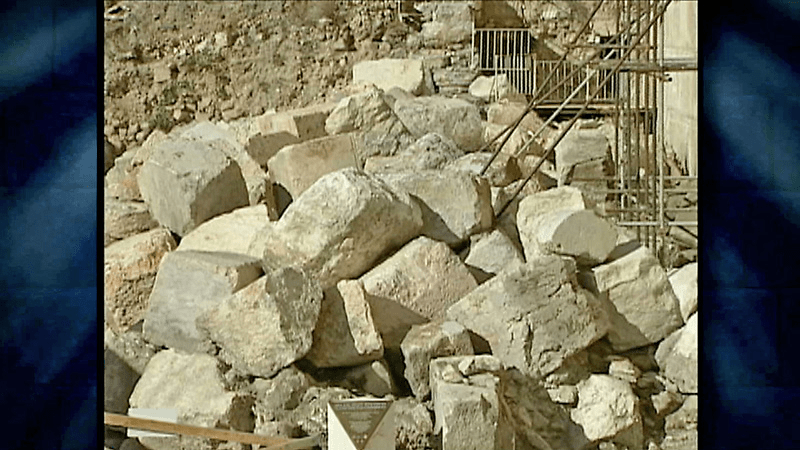
Yet those that feel threatened by this peaceful king, by a power that they cannot understand, they try to silence the disciples and those praising God in the public square. They fear reprisal. Please be quiet! Jesus, tell them to stop shouting! But there are forces at work that we cannot see and Jesus tells them, look. If you make them be quiet, these stones will shout out. A reminder that in biblical understanding, the stones represent how creation is involved in events that we tend to think affect humans alone. It is all connected. There is no stopping the praises of God. Not even death.
These voices of God’s followers and of all creation are to join together in praise of the one who will restore us and for the voices that have been silenced. When Jesus ascended into heaven he expected us to continue on as his body on earth, the church, the Body of Christ. And he left in our care the mandate to continue his work to loose the bonds of injustice, to undo the straps of the yoke, to let the oppressed go free, to share bread with the hungry, and to house the poor, and to clothe the naked. It is how we honor what we will remember this week–Jesus’ death and resurrection. We are to lift up these voices even if we are told to be quiet. We belong to a king of peace–a king that embraces all and welcomes them to his table. When we have all those with us who Christ placed in our care, then I truly believe that not only will we sing with utter joy “Blessed is the King who comes in the name of the Lord!” The stones and all God has created will join us, “Peace in heaven, and glory in the highest heaven!”
- Veronice Miles, Feasting on the Word: Year A, Volume 2: Lent through Eastertide ↩︎
- Justo Gonzalez, Luke, pg. 227 ↩︎
 Magdalena's Musings