
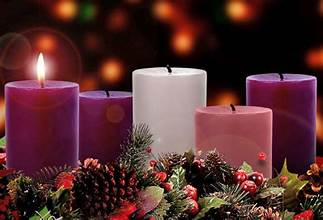
1st Sunday of Advent
Year C, 2024
On December 26, 2004 the third largest recorded underwater earthquake occurred off the coast of the Indonesian island of Sumatra and caused a tsunami in the Indian Ocean that killed hundreds of thousands of people. Now, there is a tsunami early warning system consisting of thousands of measurement stations, which are designed to warn inhabitants living in areas at risk of such disasters. However, the warning system is not just extremely complex from a technical perspective; it also swallows up a huge amount of money: each year, the system costs countries bordering the Indian Ocean between 50 and 100 million dollars.1
There is a song that has been sung by Indonesian children for centuries that starts out, “When animals go crazy, run away from the sea and go to the highlands.” It may have been a fun little song, but it was a teaching song handed down through generations of how nature warns of disaster and to pay attention. There are reports that hours or days preceding a natural disaster, animals’ behaviors change and often they flee the area they are in. A team of scientists are studying the behavior of animals and developing a very different – and simpler – type of early warning system. It’s called Icarus, an acronym that stands for International Cooperation for Animal Research Using Space. Icarus is attempting to make the extraordinary sensory abilities of many animals – their proverbial “seventh sense” – available to humans.
Historical records show that human beings benefited from the knowledge of animals and aligned their activities accordingly. There are many reports and stories of animals predicting disasters: restless birds before a volcanic eruption; snakes that awaken from hibernation prior to an earthquake; common toads who disappear and flee their colony in the middle of spawning season in advance of a major earthquake. Have you ever noticed how quiet the birds get when a storm is approaching?
Many ancient cultures developed sophisticated systems of astronomy, not just for timekeeping and navigation but also for forecasting environmental changes. The alignment of the stars, the phases of the moon, and the appearance of comets were often interpreted as omens of impending disaster. In our Gospel today, Jesus also warns that there will be signs in the sun, the moon, and the stars; the nations of the earth are confused by the roaring of the sea and the waves.
Jesus cautions us to be alert and not let these things take us by surprise. Yet we do get distracted and caught off guard. We have forgotten we are a part of God’s creation and disconnected ourselves from rhythms of animal behavior, the cycles of the trees, and the signs in the skies. We don’t know how to look for the warning signs any more, allowing our human made influences to keep us from really paying attention. And paying attention is the key to living a spiritual and Christ-connected life. Even though we grumble about it, we are much too connected to what social media influencers are telling us than listening to the voice of God. Being still, being silent, watching and waiting.
But that is precisely what the first Sunday in Advent is calling us to–watching, waiting, listening. This is the season for us to pause and reflect on what we are attuning ourselves to because if we don’t stay alert, we are much more likely to be aligned with something other than the God of Love. In four weeks we will hear about shepherds who notoriously watched the night skies and noticed a particular star one evening that led them to the incarnate God.
This first Sunday of Advent points us beyond the immediate, beyond the birth of Jesus, Christ’s first appearing, to the Second Coming of Christ. All four Sundays of Advent continue with the admonition to be on your guard, be awake, pay attention. We are not used to these sounds of warning and they make us uncomfortable because we do a really good job of skipping over the anticipation of Advent and tend to jump straight to the birth of Jesus, without waiting, without watching for the signs, which actually call us to see even further to Jesus’ return to earth in the Second Coming.
There really are events taking place in the world that can fill us with fear and make us tremble. And we busy ourselves by looking away, not noticing, not paying attention, but if we don’t pay attention we allow fear to nip at our heels and listen to other voices constantly telling us, “be afraid, be very afraid!” But what Jesus is pointing out is that we are to turn and face these fears and by so doing, we can begin to see the hope that lies beyond all the earth’s distress among the nations.
Jesus is warning us that these things will take place but he is also challenging us to stand and lift up our heads, to be on guard so that our hearts are not weighed down with the worries of this world. That is very different from looking away from or avoiding the things that are happening, but standing almost in defiance to the turmoil, refusing to give up hope. For Hope is not optimism, Hope comes out of despair, forged in Love. Hope is what we attune ourselves to when we are paying attention, when we are watching, listening, and waiting for God. A hope that may seem ludicrous to some in light of the fearful events around them. Our hope is the belief that this is not the end. Fear and death will not have the last word. Christ is coming.
Hope–hope begins with a recognition that the way the world is currently is not how it should be or how it was intended to be. Without that recognition we can fall into despair, giving into the broken state of current affairs. Or we can fall into hope–that the current brokenness of the world will not persevere, but good news–however slow–is coming. It is this hope that causes us to not abdicate our responsibilities nor grow weary of our Christian calling to care for the poor, bind up the wounded, visit the prisoner, nor reject the stranger, but rather gives us further resolve that the kingdom of God approaches and we are to be active, alert participants in its unveiling as the hands and feet of Christ on earth, caring for our neighbors. Fear–the root of evil, will not prevail.
This points us to a way to begin this Advent season. We are not a pollyanna people ignorant of the deep trauma and wounds in our world, but a people who see the world with “eyes wide open,” in all its brokenness, and still believe that this isn’t the end, but that the kingdom is coming. And when we are actively listening and watching, we can see a glimpse of the kingdom already and not yet. We believe that Love will find a way out of no way.
It reminds me of the great scene from Lord of the Rings: The Two Towers movie. A scene between Frodo and his faithful friend, Sam, when shadows and evil forces became overwhelming:
FRODO: I can’t do this, Sam.
SAM: I know. It’s all wrong. By rights we shouldn’t even be here. But we are. It’s like in the great stories, Mr. Frodo. The ones that really mattered. Full of darkness and danger they were. And sometimes you didn’t want to know the end. Because how could the end be happy. How could the world go back to the way it was when so much bad had happened.
But in the end, it’s only a passing thing, this shadow. Even darkness must pass. A new day will come. And when the sun shines it will shine out the clearer. Those were the stories that stayed with you. That meant something. Even if you were too small to understand why. But I think, Mr. Frodo, I do understand. I know now. Folk in those stories had lots of chances of turning back only they didn’t. Because they were holding on to something.
FRODO: What are we holding on to, Sam?
SAM: That there’s some good in this world, Mr. Frodo. And it’s worth fighting for.
Yes, there are and will be signs and foreboding, but lift your heads in the hope to which you have been called. Jesus’ followers are not to share the fear and despair; in contrast, our attitude is to be one of rising up and joyful expectation. We will be ready to welcome the deliverance that is through Christ.
The Son of God is coming, the kingdom of God is near, Heaven and earth will pass away, but the words of Christ will not pass away. Jesus, the liberator, approaches. Do not fear. Your hope is not of this world, but it is fashioned in the depths of your heart and soul and you will stand before the Son of Man. People who have stood on this faith have faced war, famine, persecution, and oppression and still have proclaimed as in the words scratched on the walls of a cellar in Cologne, Germany by a Jew hiding from Nazi persecution:
“ I believe in the sun even when it’s not shining.
I believe in Love even when I don’t feel it.
I believe in God even when, even when God is silent.”
This is the Hope we stand on. We light a candle in anticipation on the first Sunday of Advent, in certain hope that the Risen Christ is coming to reclaim God’s people, wipe away every tear, and restore all things to wholeness again. Listen. Watch. Be ready.
 Magdalena's Musings