
14th Sunday after Pentecost
Ephesians 6:10-20
Last Wednesday, we wrapped up the summer bible study on The Chosen series. In the episode we discussed that evening, the disciples are talking amongst themselves about what it was like to follow Jesus. It was still early in Jesus’ ministry yet some of the eagerness of the disciples was beginning to wear off. Many of them thought, like most Jews at the time, that the Messiah was going to build an army to take out the oppressive Roman Empire and restore land and power back to the Israelites. “How long are we going to keep going from place to place while he does all this healing?” the ask. “When is he going to start building some action? I’m ready to go!” By the end of the episode, tired, hot, disgruntled, and impatient, they all end up in a huge squabble with one another. Jesus is not handling things like they had hoped, and to add to their consternation, he’s healing people on the other side of the river, too. Not just the Jews, but also the Samaritans. Scandalous.
Like many of us, they believed it was the power of the sword that would solve their problems. Later they would learn that even in defending Jesus against arrest, he would tell them, “put away your swords.”
In this letter to the Ephesians, we see Paul, once a zealot and violent defender of Judaism, putting on a different kind of armor. This is the same Paul that became the disciple to the Gentiles and wrote to the Galatians, “There is neither Jew nor Greek, there is neither slave nor free, there is neither male nor female; for you are all one in Christ Jesus.”
Paul’s faith evolved from violence to a more courageous faith of standing in truth and prayer, in justice for all who suffered from the results of powers and principalities and systems that oppressed God’s people. Paul exchanged military armor for the armor of the Spirit.
Now, the Ephesian followers of Christ were mostly not Jewish. They didn’t have the background of the Torah taught to them from an early age, so this letter was sent to explain, encourage, and energize them in their new found Christian faith while living in a city with numerous monuments to gods, most famously, the Temple of Artemis. I was in Ephesus in April, and it was astounding to see the ruins of a magnificent city which had been teeming with culture and trade, a place that remains a destination for pilgrims today with its rich Greek, Roman, and Christian history. But Christianity was counter-cultural to the way of life there, and they needed encouragement to stay the course.
It was challenging for the Christian Ephesians to live as a distinct minority in this city of the Roman Empire. One of the major challenges that these early Christians experienced in their transformation concerned power. Roman civilization was built on militarism. But for these new Christians, what kind of battle was being waged and against whom?
The teachings of Jesus and Paul were that Christians were called not to bear arms against any human agents, because their battle was a spiritual one. Their true enemies were forces that constantly waged war in their inner spirit and at the cosmic level. In this spiritual warfare, Christ through the Spirit is what gives power and strength to Christians, and Christians are “to be strong in the Lord and in the strength of God’s power.” 1“Put on the whole armor of God,” it says in verse 11, “For our struggle is not against enemies of blood and flesh.” The way of Christ is the way of peace requiring a different kind of strength. This was an unheard of concept and it brought Christians a great deal of ridicule and harassment.
This passage has too frequently been interpreted to mean that we don this armor merely to protect ourselves. However, the context of the passage suggests something far more expansive, spanning both the spiritual and earthly realms. Just as God had previously put on armor to act as the Divine Warrior against the enemies of justice, righteousness, truth, and uprightness for the sake of those who have experienced the effects of injustice, unrighteousness, falsehood, and duplicity, so now Paul expect[ed] his audience to do the same.2
By using the language of Isaiah 59, Paul is calling on Christians to stand up for those who cannot stand up for themselves. We are not to be at war with each other, but are to pay attention and make ourselves ready with this spiritual armor to stand firmly against rulers of injustice and the cosmic powers of darkness.
Yet too frequently we turn on each other and our neighbors from wherever they may hail and we listen to the cosmic forces at work in the world that tell us to fear each other, to hate each other, and build up walls against each other. That is not the way of Love, that is not the way of Christ. If we allow that, if we turn on each other, even with the pettiest of irritations and retaliate, then we have missed the mark, allowing ourselves to get distracted from the things that should concern us. If we are silent or turn away from the forces of evil that numb us to the innocent slaughter of children and families around the world, then we lose the greater battle in our own souls, even if “our side” wins the earthly war, because our children are not ok until all children are ok.
Jesus came that we may ALL have life and have it abundantly. To rip away life by violence is not the way of Christ. Our armor is not for earthly battle. Our belt is the truth of Christ, our breastplate of righteousness protects our heart and the lungs with which we draw in the very breath of God that keeps us alive. This is about the character of a Christian. “As shoes for your feet put on whatever will make you ready to proclaim the gospel of peace,” it says in verse 15. These are the kind of shoes with which we will walk the path of Jesus.
I’m sure most of you heard about the recent riots in England. Riots rooted in the very powers of darkness that this letter is referring to. I had worried about traveling by myself in the midst of the upheaval. So, what were the odds that an Episcopal priest from the United States and a Muslim cab driver and public school teacher in England would end up in a two hour conversation on the way to the airport and find out they had the same undergrad degree? In World Religions. His friends call him Hari Potter and we talked non stop about education, family, and about our faiths both being rooted in Abraham and how much we have in common. We talked about our grief over the suffering children in Gaza and our disbelief that this suffering continues. We talked about the ridiculousness of racism and how we all really want the best for everyone. As we neared the airport he said, “In the end we are all human.”
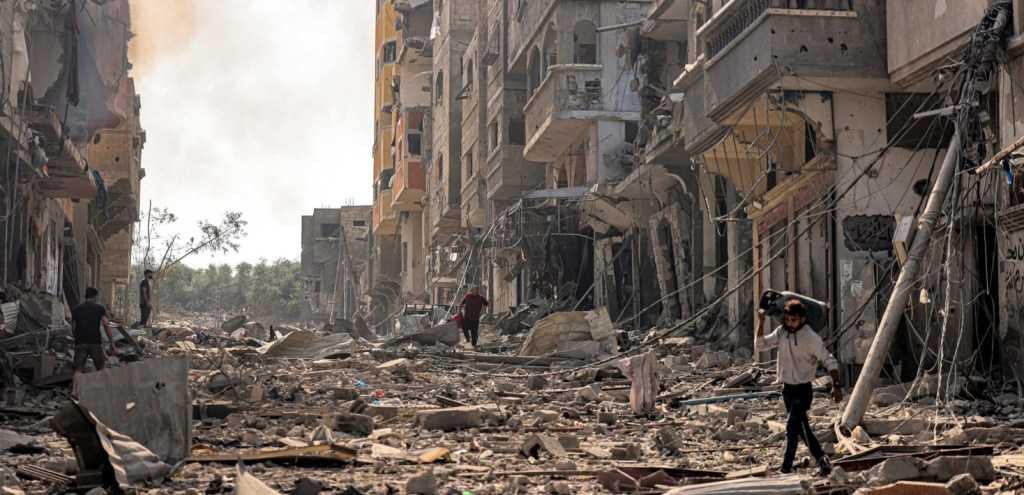
Now there are not many sides to the commandment to love your neighbor as yourself. You either do or you don’t. Christ is not brandishing a sword against the very Beloved people he came to save. But he is a God that suffers with us, the very meaning of compassion. “God is under the rubble in Gaza,” Rev. Munther Isaac, a Lutheran pastor, preached a few months ago to Palestinian Christians in Bethlehem. God is being held hostage.3 God is in the famine. God is on the operating table, on the streets, in the prisons, with us in our loneliness. Our God is one who knows suffering and loss, whose son was crucified. God walks with us through the valley of the shadow of death. My prayer is that those who are suffering around the world will feel this healing and comforting presence. Ephesians reminds us to “Pray in the Spirit at all times in every prayer and supplication. To that end keep alert and always persevere in supplication for all the saints,” for all the children.
This is strange armor, yet these are the tools that awaken in us the might of prayer, the strength of the Word, the power of the Spirit in us. We are called to stand in truth, righteousness, and peace. The church is to stand on this holy ground and not to waver, budge, or buckle under the pressures of the cosmic powers of this present darkness because we stand firmly rooted as the light bearers of Christ.
My brothers, sisters, and siblings in Christ, stand, and stand firm, and bear witness to the world of the Good News of Jesus Christ, be the light that shines a way for those whom the light has gone out. We do not do this alone, but with each other and with the mighty power of the risen Christ in us and around us. Put on your armor and pay attention to what Christ is calling his church and his followers to bear witness to. Christ is our hope, and we can be a beacon of that hope for those that cannot see it, a hope that shines a light and a voice to the ways of justice and peace.
In the words of saint and martyr, Oscar Romero, from El Salvador, “Christianity discerns that beyond the night the dawn already glows. The hope that does not fail is carried in the heart. Christ goes with us!”
- Haruko Nawata Ward, Associate Professor of Church History, Columbia Theological Seminary, Decatur, Georgia ↩︎
- Ibid. ↩︎
- Rev. Dr. Munther Isaac. God is Under the Rubble in Gaza. Sojourners magazine, Oct 30, 2023. https://sojo.net/articles/god-under-rubble-gaza ↩︎
 Magdalena's Musings