
Proper 20, Year A, Matt. 20: 1-16
Whenever Jesus starts a parable by saying, “The Kingdom of Heaven is like…”, hold on to your hats. He is going to turn our world upside down because the Kingdom of Heaven is not like this world. We need to remember that Jesus teaches about the Kingdom of Heaven being realized on earth now, as well as in the future. And since we are the Body of Christ, then we are to be participating in bringing about the Kingdom here on earth–that is God’s kingdom, not the kind of kingdom humans tend to establish.
The Kingdom of Heaven is very often counter to how our societies and governments tend to act. The Kingdom of Heaven is based on principles established by God, not humankind. And that can upset a lot of people. Jesus is showing us what he wants his followers to understand, but it is not intuitive for us. So we have to wrestle with it, try to understand it, and allow it to transform us into disciples of Jesus. So what is this parable really about?
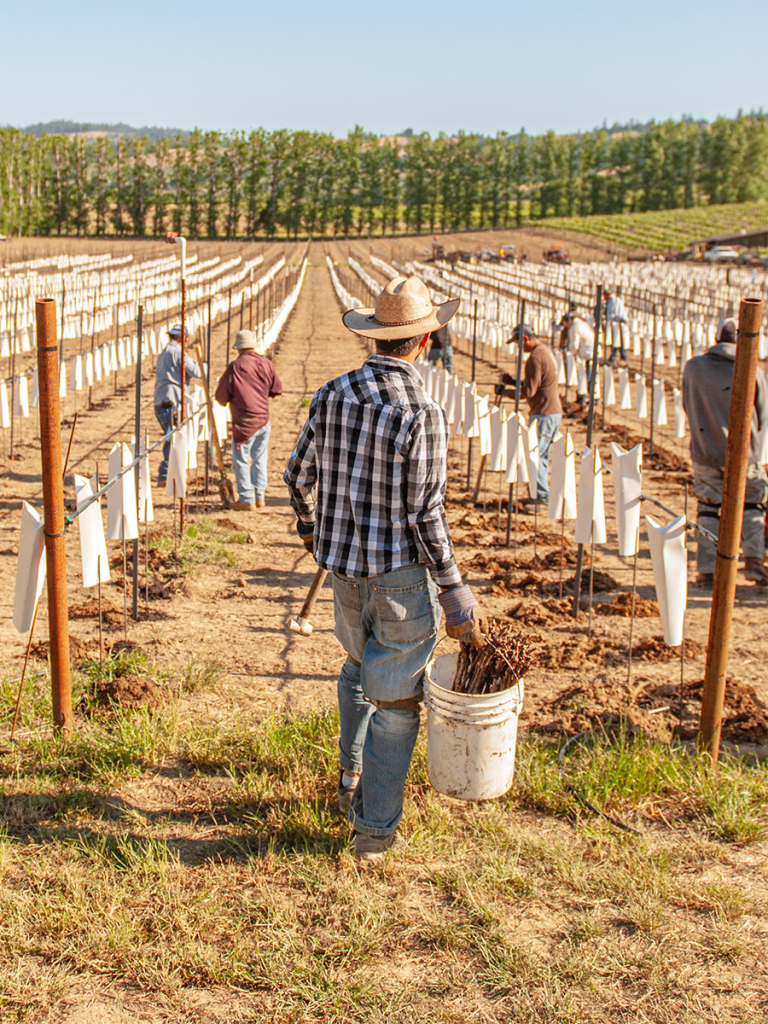
The Kingdom of Heaven is like a landowner who went out early in the morning to hire laborers for his vineyard. That makes sense. Be careful to not turn the landowner into God. This is a parable about how the Kingdom of Heaven is supposed to operate with our involvement. The landowner hired the number of people that he needed and offered them a fair wage. So far, we like this landowner. But the landowner is out and about in the town three hours later and there are people standing around, day laborers that are hoping to pick up some work. They are not lazy, they are not partying, they are waiting. He asks them why they are standing there and they answer honestly, “Because no one has hired us.”
There is no indication that the landowner necessarily needs more laborers. He already hired what he needed from the group earlier that morning. But he sees these folks need some work. So he says, “Come on! You can come to my vineyard.” These are folks who hadn’t been chosen yet, who were left behind, and we can only imagine for what reasons. Maybe they looked different. Maybe they spoke a different language. Maybe they were elderly or weak. One thing we do know is that they were overlooked and not the desirable workers usually chosen.
I am sure every single one of us remembers being in school during recess and waiting to be chosen to play on the kick ball team. It is the worst feeling to be standing there and not be chosen when you want to play. You love to play the game but you are not chosen first or no one chooses you at all. You know after a while that you were not really wanted.
This landowner goes back throughout the day. He goes back five times to see who hasn’t been chosen. Who has not been given the opportunity to work, to enter the vineyard. He has compassion on those who were not given an opportunity. The landowner offers a way to all those not invited or who have been overlooked and gives them a chance to work in his vineyard. They are willing and waiting and the landowner gathers them up. So far, so good.
Then it comes time to pay the workers at the end of the day. This is where it gets tricky. We want to scratch our heads at the action the landowner takes now. He tells his manager to pay the hired workers. Now, he gives everyone the same pay. Ok, first of all, if you’re going to do that, why not avoid the grief everyone is going to give you for doing that by paying the people who’ve been there all day first? Send them on their way. They don’t need to know. They were happy with the pay they were offered, so dear landowner, save yourself some trouble. But no. This is an example of the Kingdom of God. This parable is about the economy of God. It’s about giving everyone enough. So the landowner pays the last workers first so that the others can see these last ones were of value, too. NO ONE was treated unfairly. EVERYONE got what they were promised and what they agreed to. The landowner made everyone equal in value.
Jesus’ point here is that all those we pass by, all those willing to be part of the community of Christ, even here at St. Paul’s, they are to be included and they are to be included equally. Everyone has worth. We all receive the same blessings regardless of whether or not others find us worthy. When all of those people who have been waiting and waiting to be accepted by God’s people, especially the Church, God is going to be generous! They have been invited to be a part of the Kingdom of Heaven on earth now, and finally, it means they are going to get the same generosity of God as everyone else as if they had been included from the beginning.
In the Kingdom of Heaven there is enough. We do not have to give into the fear that we won’t get our share. Or be jealous when someone else receives a portion of the blessing. When people come into the church, the place where Jesus expects us to be about the work of being the Kingdom of God on earth, he expects us to participate in God’s generosity. We are to be generous with our love, generous with our time, generous with our money and possessions, generous to one another in forgiveness and acceptance, and generous in inviting everyone to participate in the life of the Church and in the community. We are to make sure everyone gets enough. Because there is enough.
Now, who do you see yourself as in this parable? The landowner? The first workers or the ones hired last? How many of you place yourselves in the role of the first workers and then feel indignant that you did not get more than those who came later? As the oldest child in my family raised by the oldest children in each of my parent’s family, I will raise my hand. I can easily see myself as the one who got signed up early for the work. I would have taken a lot of self-pride in being there all day because, by golly, I have an overdose of the American work ethic. And I might have joined in with those who were grumbling because they wanted more than the others. But staying true to this parable being told by Jesus two thousand years ago, we may need to rethink where we see ourselves. God is generous. God wants everyone to have enough and we are invited to do likewise.
The Christian faith came from the faith of the Israelites, God’s chosen people, thousands and thousands of years ago. Jesus and his first disciples first proclaimed the Gospel to the Jews as they themselves were Jewish. Then the Way of Jesus was shared with the Gentiles. Only later did we get grafted into this middle-eastern religion. In the year 2023 C.E., WE, you and me and all of us sitting here today, are the last ones invited in to work in the vineyard. And God is going to be very generous and give us an equal portion of what belongs to God for our work in this vineyard. No one is excluded that went before us, no one is to be excluded that comes after us. We are grafted in members as disciples of Christ. Perhaps now we can imagine the gratitude that those last hired laborers felt when they received the generosity of the landowner. Are we envious because God is generous?
The Kingdom of Heaven is like a landowner that takes delight in finding all those who are waiting to be chosen. The Kingdom of Heaven is like a landowner that shares the blessings and gives everyone enough. The point of this parable is that we should go and do likewise. Thanks be to God!
________________________________________________
Propio 20, Año A, Mateo 20: 1-16
Siempre que Jesús empieza una parábola diciendo: “El Reino de los Cielos es como…”, agárrense los sombreros. Va a poner nuestro mundo patas arriba, porque el Reino de los Cielos no es como este mundo. Debemos recordar que Jesús enseña que el Reino de los Cielos se realizará en la Tierra ahora, así como en el futuro. Y puesto que somos el Cuerpo de Cristo, debemos participar en la realización del Reino aquí en la tierra, que es el reino de Dios, no el tipo de reino que los humanos tienden a establecer.
El Reino de los Cielos es muy a menudo contrario a cómo tienden a actuar nuestras sociedades y gobiernos. El Reino de los Cielos se basa en principios establecidos por Dios, no por la humanidad. Y eso puede molestar a mucha gente. Jesús nos muestra lo que quiere que entiendan sus seguidores, pero no es intuitivo para nosotros. Así que tenemos que luchar con esto, intentar comprenderlo y permitir que nos transforme en discípulos de Jesús. Entonces, ¿de qué trata realmente esta parábola?
El Reino de los Cielos es como un terrateniente que sale por la mañana temprano a contratar obreros para su viña. Eso tiene sentido. Ten cuidado de no convertir al terrateniente en Dios. Se trata de una parábola sobre cómo debe funcionar el Reino de los Cielos con nuestra participación. El terrateniente contrató al número de personas que necesitaba y les ofreció un salario justo. Hasta aquí, nos gusta este terrateniente. Pero el terrateniente sale por el pueblo tres horas más tarde y hay gente de pie, jornaleros que esperan conseguir algún trabajo. No son vagos, no están de fiesta, están esperando. Les pregunta por qué están allí parados y ellos responden sinceramente: “Porque nadie nos ha contratado”.
No hay indicios de que el terrateniente necesite necesariamente más jornaleros. Ya había contratado a los que necesitaba del grupo esa misma mañana. Pero ve que esta gente necesita trabajo. Así que les dice: “¡Venid! Venid a mi viña”. Se trata de gente que aún no había sido elegida, que fue dejada atrás, y sólo podemos imaginar las razones del por qué. Quizá tenían un aspecto diferente. Quizá hablaban una lengua diferente. Quizá eran ancianos o débiles. Lo que sí sabemos es que se les pasó por alto y que no eran los trabajadores deseables que se suelen elegir.
Estoy segura de que cada uno de nosotros recuerda estar en la escuela durante el recreo y esperar a ser elegido para jugar en el equipo de kickball. Es la peor sensación estar allí de pie y que no te elijan cuando quieres jugar. Te encanta jugar, pero no te eligen el primero o no te elige nadie. Al cabo de un tiempo sabes que en realidad no te querían.
Este terrateniente vuelve a lo largo del día. Vuelve cinco veces para ver quién no ha sido elegido. A quién no se le ha dado la oportunidad de trabajar, de entrar en la viña. Se compadece de aquellos a los que no se les ha dado una oportunidad. El terrateniente ofrece un camino a todos los que no han sido invitados o que han sido pasados por alto y les da la oportunidad de trabajar en su viña. Están dispuestos y esperan, y el terrateniente los recoge. Hasta aquí, todo bien.
Entonces llega el momento de pagar a los trabajadores al final del día. Aquí es donde la cosa se complica. Nos quedamos sin entender la medida que toma ahora el terrateniente. Le dice a su encargado que pague a los trabajadores contratados. Ahora, les da a todos la misma paga. En primer lugar, si vas a hacer eso, ¿por qué no evitas la bronca que te va a echar todo el mundo por hacerlo pagando primero a la gente que ha estado allí todo el día? Que sigan su camino. No necesitan saberlo. Estaban contentos con la paga que les ofrecieron, así que, querido terrateniente, ahórrate problemas. Pero no. Éste es un ejemplo del Reino de Dios. Esta parábola trata de la economía de Dios. Trata de dar a todos lo suficiente. Así que el terrateniente paga primero a los últimos trabajadores para que los demás vean que estos últimos también tenían valor. NADIE fue tratado injustamente. TODOS recibieron lo que se les prometió y lo que acordaron. El terrateniente hizo que todos tuvieran el mismo valor.
Lo que Jesús quiere decir aquí es que todos aquellos por los que pasamos, todos los que están dispuestos a formar parte de la comunidad de Cristo, incluso aquí en San Pablo, deben ser incluidos y deben ser incluidos por igual. Todos valemos. Todos recibimos las mismas bendiciones, independientemente de que los demás nos consideren dignos o no. Cuando todas esas personas que han estado esperando y esperando ser aceptadas por el pueblo de Dios, especialmente por la Iglesia, ¡Dios va a ser generoso! Ahora se les ha invitado a formar parte del Reino de los Cielos en la Tierra y, finalmente, eso significa que van a obtener la misma generosidad de Dios que todos los demás, como si se les hubiera incluido desde el principio.
En el Reino de los Cielos hay suficiente. No tenemos que ceder al miedo de no recibir nuestra parte. Ni sentir celos cuando otra persona reciba una parte de la bendición. Cuando la gente entra en la Iglesia, el lugar donde Jesús espera que nos dediquemos a la labor de ser el Reino de Dios en la Tierra, espera que participemos en la generosidad de Dios. Debemos ser generosos con nuestro amor, generosos con nuestro tiempo, generosos con nuestro dinero y nuestras posesiones, generosos unos con otros en el perdón y la aceptación, y generosos invitando a todos a participar en la vida de la Iglesia y de la comunidad. Debemos asegurarnos de que todos tengan suficiente. Porque hay suficiente.
Ahora bien, ¿Cómo te ves a ti mismo en esta parábola? ¿El terrateniente? ¿Los primeros trabajadores o los últimos contratados? ¿Cuántos de ustedes se ponen en el papel de los primeros trabajadores y luego se sienten indignados por no haber recibido más que los que vinieron después? Como hija mayor de mi familia, criada por los hijos mayores de cada una de las familias de mis padres, levantaré la mano. Me veo fácilmente como el que se apuntó antes al trabajo. Me habría sentido muy orgullosa de estar allí todo el día porque, caramba, tengo una sobredosis de la ética del trabajo estadounidense. Y quizá me hubiera unido a los que refunfuñaban porque querían más que los demás. Pero si nos mantenemos fieles a esta parábola contada por Jesús hace dos mil años, quizá tengamos que replantearnos dónde nos vemos. Dios es generoso. Dios quiere que todos tengamos lo suficiente y nosotros estamos invitados a hacer lo mismo.
La fe cristiana surgió de la fe de los israelitas, el pueblo elegido de Dios, hace miles y miles de años. Jesús y sus primeros discípulos proclamaron primero el Evangelio a los judíos, pues ellos mismos eran judíos. Luego compartieron el Camino de Jesús con los paganos. Sólo más tarde fuimos injertados en esta religión del medio oriente. En el año 2023, NOSOTROS, tú y yo y todos los que estamos sentados hoy aquí, somos los últimos invitados a trabajar en la viña. Y Dios va a ser muy generoso y nos va a dar una parte igual de lo que pertenece a Dios por nuestro trabajo en esta viña. No se excluye a nadie que nos haya precedido, ni se excluirá a nadie que venga después de nosotros. Somos miembros injertados como discípulos de Cristo. Quizá ahora podamos imaginar la gratitud que sintieron aquellos últimos jornaleros al recibir la generosidad del terrateniente. ¿Sentimos envidia porque Dios es generoso?
El Reino de los Cielos es como un terrateniente que se complace en encontrar a todos los que esperan ser elegidos. El Reino de los Cielos es como un terrateniente que comparte las bendiciones y da a todos lo suficiente. El sentido de esta parábola es que vayamos y hagamos lo mismo. ¡Gracias a Dios!
 Magdalena's Musings