
Proper 18, Year A, Romans 13-8-14
Many of you know that my husband and I are Franciscans, meaning that we follow the way of Saints Francis and Clare of Assisi. These two saints lived in Europe in the medieval ages in an area we now call Italy. Francis grew up as a spoilt rich boy and he could not stand to see the people who lived in poverty in his city, especially lepers. In fact, leprosy repulsed him so much that he would turn around and go a different direction if he saw one coming his way. Leprosy is a disease that causes nerve damage to the hands, feet, and face. I’ve met lepers whose faces and hands were partially eaten away from the disease. It is shocking to see. We now call it Hansen’s disease and know that it is easy to treat, but in Francis and Clare’s day, it was thought to have been highly contagious. Throughout history, we have responded to lepers by locking them away or making them live in remote areas where they are isolated from the rest of society. Even today, we treat all kinds of people as if they were lepers. Too often we don’t want to be with people that aren’t like us.
When Francis was a young man, he developed a deep, deep longing for God and became a follower of Jesus Christ. He went from rich party boy to a man who gave up everything, including his wealth, to live out the Christian faith that he discovered in the Gospels. During this spiritual awakening in him, he fell in love with Jesus. Jesus tested that love. Like Jesus had asked the apostle Peter, he also asked Francis, “Do you love me?” “Of course, I love you, Lord!” they both had answered.
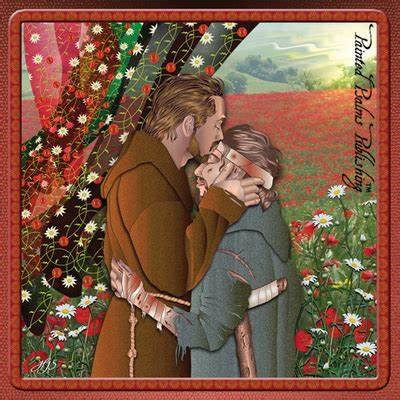
Well, one day, as the legend is told, Francis was riding his horse down the road away from town and he heard a bell. He instantly knew what that meant. In those days, lepers were given bells or clappers to warn people that they were coming so they could be avoided. Francis looked down from his horse, looked at the leper, and knew that it was Jesus coming to him in the form of a leper. “Francis, do you love me?” Now Francis was still horrified by the sight of the leper, but he got off his horse, went up to the leper, and kissed him. It wasn’t until after Francis acted on the commandment to love that the love of God flooded him, and he was able to truly love the leper. The obedience to love came first. Then came the ability to do so.
In our Epistle reading today, Paul is writing to the Christians in Rome who are arguing about if the Judaic law should still be practiced or not. Jesus was a Jew and he had followed the law. But there were now converts to the way of Jesus who were Gentiles and had never followed the law of the Jews. Christianity was clearly open to everyone. Paul understood the situation and wrote the letter to both the Jewish and the Gentile Christians in Rome in order to persuade them to build up a peaceful and close relationship between their house churches. Later in this letter, Paul admonished both groups to change their attitude towards one another. Here at St. Paul San Pablo, there are several cultures and traditions of worship. These things should unite us, not divide us. I am so happy when I see that we work hard to be one community bound by our faith in Christ. In his letter, Paul is trying to explain to the Roman Christians this very same thing–what loving your neighbor means. He is reminding them of Jesus’ first and foremost commandment for his followers. Love the Lord your God and love your neighbor as yourself. Those words sound simple, but we all know how hard this commandment is. So, Paul tries to break it down for us.
The early Christians were not all that different from us, it seems. Our human condition is sometimes our obstacle to walking in the way of Jesus. We want love, we expect love. We want and even demand that others love us first. If you loved me, you would…fill in the blank. But Paul says that’s not the way to look at it. Love is a debt we owe others. “Owe no one anything, except to love one another,” he writes. It fulfills the law because it conquers all rivalry within our community if we offer it, not withhold it. And it is not restricted only to fellow Christians but embraces all human beings. Paul shows how “the faith that works itself out through love” (Gal 5:6) actually “upholds the law”. That’s what Francis realized, too. We offer love to others; it is not a product that we grab for ourselves. Our focus is on giving, for it is in giving that we receive.
Love is action and we are responsible to act on this love. What can you do to better the life of another, to care about their well-being whether you like them or not and whether you are in a good mood or not. Your actions may be grounded in a sense of gratitude or delight in the person or “it may be done despite anger, exhaustion, depression, fear or aversion, or simply as a prayer and response to God, who links us all, who is our common Creator, our Father, our Mother, and in whom we are brothers, sisters, and siblings: ‘Who makes the sun rise on the evil and on the good, and sends rain on the just and the unjust’ (Matthew 5:45).” Bruegemann
The love we are talking about here is not the same thing as the love of dreams. Love one’s enemies? How can you love those you don’t even know? It can be hard and uncomfortable, much like kissing a leper. Active love is work and takes perseverance. Our hearts don’t change until we first act on love. If you are waiting around until you feel like loving, you are not going to make much progress. Jesus and Paul are talking about rolling up your sleeves, getting your hands dirty, choosing to go where you are challenged and uncomfortable.
I have been challenged, too, by Jesus words, “Do you love me?” I am challenged by Paul’s explanation of love as a debt I owe to every person. You and I are companions on this journey with Christ. We do this work together. I will close with this Franciscan blessing for all of us, praying that we continue to work together in this way of Love:
MAY GOD BLESS YOU with discomfort, at easy answers, half-truths, and superficial relationships so that you may live deep within your heart.
May God bless you with anger at injustice, oppression, and exploitation of people, so that you may work for justice, freedom and peace.
May God bless you with tears, to shed for those who suffer pain, rejection, hunger, and war, so that you may reach out your hand to comfort them and to turn their pain to joy.
And may God bless you with enough foolishness to believe that you can make a difference in the world, so that you can do what others claim cannot be done, to bring love, justice and kindness to all our children and those who suffer.
Amen
Muchos de ustedes saben que mi marido y yo somos franciscanos, lo que significa que seguimos el camino de los santos Francisco y Clara de Asís. Estos dos santos vivieron en Europa en la Edad Media, en una zona que ahora llamamos Italia. Francisco creció como un niño rico mimado y no soportaba ver a la gente que vivía en la pobreza en su ciudad, especialmente a los leprosos. De hecho, la lepra le repugnaba tanto que se daba la vuelta e iba en otra dirección si veía a uno acercándose. La lepra es una enfermedad que causa lesiones nerviosas en las manos, los pies y la cara. He conocido a leprosos que tenían la cara y las manos parcialmente carcomidas por la enfermedad. Es espantoso de ver. Ahora la llamamos enfermedad de Hansen y sabemos que es fácil de tratar, pero en tiempos de Francisco y Clara se pensaba que era muy contagiosa. A lo largo de la historia, hemos respondido a los leprosos encerrándolos o haciéndoles vivir en zonas remotas donde están aislados del resto de la sociedad. Incluso hoy en día, tratamos a todo tipo de personas como si fueran leprosos. Con demasiada frecuencia no queremos estar con personas que no son como nosotros.
Cuando Francisco era joven, desarrolló un profundo anhelo de Dios y se convirtió en seguidor de Jesucristo. Pasó de ser un rico juerguista a un hombre que renunció a todo, incluida su riqueza, para vivir la fe cristiana que descubrió en los Evangelios. Durante este despertar espiritual en él, se enamoró de Jesús. Jesús puso a prueba ese amor. Como Jesús había preguntado al apóstol Pedro, también preguntó a Francisco: “¿Me amas?”. “¡Claro que te amo, Señor!”, habían respondido ambos.
Bien, un día, según cuenta la leyenda, Francisco iba a caballo por el camino, lejos de la ciudad, y oyó una campana. Al instante supo lo que significaba. En aquella época, a los leprosos se les ponían campanillas o badajos para avisar a la gente de que se acercaban y así poder evitarlos. Francisco bajó de su caballo, miró al leproso y supo que era Jesús que venía hacia él en forma de leproso. “Francisco, ¿me amas?” Francisco seguía horrorizado ante la visión del leproso, pero se bajó del caballo, se acercó al leproso y le besó. No fue hasta que Francisco cumplió el mandamiento de amar cuando el amor de Dios le inundó y pudo amar de verdad al leproso. Primero vino la obediencia de amar. Luego vino la capacidad de hacerlo.
En nuestra lectura de la Epístola de hoy, Pablo está escribiendo a los cristianos de Roma, que discutían sobre si la ley judaica debía seguir practicándose o no. Jesús era judío y había seguido la ley. Pero ahora había conversos al camino de Jesús que eran gentiles y nunca habían seguido la ley de los judíos. El cristianismo estaba claramente abierto a todos. Pablo comprendió la situación y escribió la carta tanto a los cristianos judíos como a los gentiles de Roma para persuadirles de que establecieran una relación pacífica y estrecha entre sus iglesias domésticas. Más adelante en esta carta, Pablo amonestó a ambos grupos para que cambiaran su actitud mutua. Aquí, en San Pablo San Pablo, hay varias culturas y tradiciones de culto. Estas cosas deberían unirnos, no dividirnos. Me siento muy feliz cuando veo que nos esforzamos por ser una comunidad unida por nuestra fe en Cristo. En su carta, Pablo intenta explicar a los cristianos romanos esto mismo: lo que significa amar al prójimo. Les recuerda el primer y principal mandamiento de Jesús para sus seguidores. Ama al Señor tu Dios y ama a tu prójimo como a ti mismo. Esas palabras parecen sencillas, pero todos sabemos lo difícil que es este mandamiento. Por eso, Pablo intenta desmenuzarlo para nosotros.
Parece que los primeros cristianos no eran tan distintos de nosotros. Nuestra condición humana es a veces nuestro obstáculo para caminar por el camino de Jesús. Queremos amor, esperamos amor. Queremos e incluso exigimos que los demás nos amen primero. Si me amaras, harías… rellena el espacio en blanco. Pero Pablo dice que ése no es el modo de verlo. El amor es una deuda que tenemos con los demás. “No debas nada a nadie, salvo amarte los unos a los otros”, escribe. Cumple la ley porque vence toda rivalidad dentro de nuestra comunidad si lo ofrecemos, no lo retenemos. Y no se limita sólo a los compañeros cristianos, sino que abarca a todos los seres humanos. Pablo muestra cómo “la fe que se realiza por el amor” (Gal 5,6) en realidad “cumple la ley”. De eso también se dio cuenta Francisco. Ofrecemos amor a los demás; no es un producto del que nos apropiamos. Nos centramos en dar, porque es dando como recibimos.
El amor es acción y somos responsables de actuar en consecuencia. Qué puedes hacer para mejorar la vida de otro, para preocuparte por su bienestar, te guste o no y estés o no de buen humor. Tus acciones pueden basarse en un sentimiento de gratitud o deleite hacia la persona o “pueden realizarse a pesar de la ira, el agotamiento, la depresión, el miedo o la aversión, o simplemente como oración y respuesta a Dios, que nos une a todos, que es nuestro Creador común, nuestro Padre, nuestra Madre, y en quien somos hermanos y hermanas: ‘Que hace salir el sol sobre malos y buenos, y hace llover sobre justos e injustos’ (Mateo 5:45)”. Bruegemann
El amor del que hablamos aquí no es lo mismo que el amor de los sueños. ¿Amar a los enemigos? ¿Cómo puedes amar a quienes ni siquiera conoces? Puede ser duro e incómodo, como besar a un leproso. El amor activo es trabajo y requiere perseverancia. Nuestros corazones no cambian hasta que primero actuamos con amor. Si esperas a tener ganas de amar, no vas a progresar mucho. Jesús y Pablo hablan de arremangarse, de ensuciarse las manos, de elegir ir allí donde te sientas desafiado e incómodo.
A mí también me han desafiado las palabras de Jesús: “¿Me amas?”. Me siento desafiado por la explicación de Pablo del amor como una deuda que tengo con cada persona. Tú y yo somos compañeros en este viaje con Cristo. Hacemos este trabajo juntos. Terminaré con esta bendición franciscana para todos nosotros, rezando para que sigamos trabajando juntos en este camino de Amor:
QUE DIOS TE BENDIGA con el malestar, ante las respuestas fáciles, las verdades a medias y las relaciones superficiales, para que puedas vivir en lo profundo de tu corazón.
Que Dios te bendiga con ira ante la injusticia, la opresión y la explotación de las personas, para que puedas trabajar por la justicia, la libertad y la paz.
Que Dios te bendiga con lágrimas, que derrames por los que sufren dolor, rechazo, hambre y guerra, para que puedas tenderles la mano para consolarlos y convertir su dolor en alegría.
Y que Dios te bendiga con la suficiente insensatez para creer que puedes marcar la diferencia en el mundo, para que puedas hacer lo que otros afirman que no se puede hacer, para llevar el amor, la justicia y la bondad a todos nuestros hijos y a los que sufren.
Amén
 Magdalena's Musings