
Proper 15, Year A–Matthew 15: (10-20), 21-28
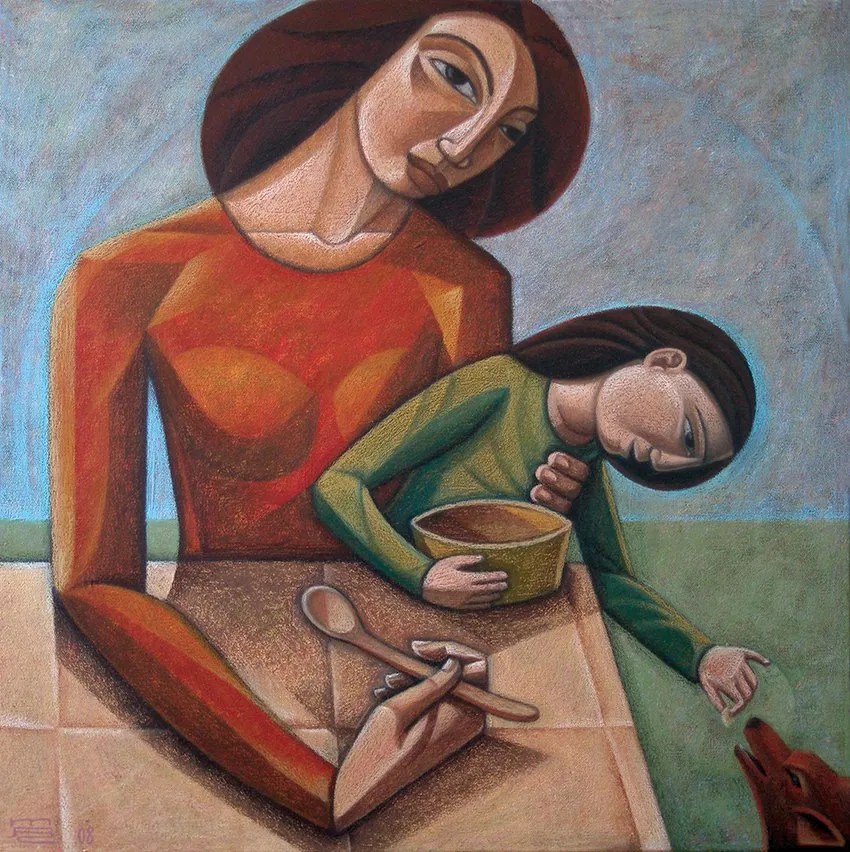
This passage in Matthew’s Gospel today is really uncomfortable to read. Jesus is not in a good mood and is even calling someone a bad name! This is not a warm, fuzzy Jesus, but the Jesus that shows up more often to make us uncomfortable and squirm a little, to get us to think, to make a point. Because when we’re comfortable, we really don’t think about stuff. How many of us sit around when things are going well and we are comfortable and content and think to ourselves, “Why am I feeling content? Why is everything going just like I want it to? There must be an answer! I must figure it out!” No, we just take it for granted. Kind of like Good News vs. bad news. Ever wonder why the media sounds so doomsday? Good news doesn’t seem exceptional but really it is the exception we should all be raving about!
Anyway, what this woman represents in this Gospel is something not only the Jews have wrestled with, but now Christians, too. How do we deal with those whom we’ve been told are unclean or unworthy? Jesus’ rudeness can have many explanations, but he is indeed dismissing her here. You cannot overlook it, but why? It is quite possible that he is modeling the Pharisees behavior that he was addressing in the verses preceding this passage who were more concerned about ritual washing and purity rites being violated than what was in their hearts. It’s not what goes in you that’s unclean, but what comes out of your mouth because it reveals what is in your heart. So looking and acting like a good person doesn’t mean anything if in your heart you are despising someone else.
It is also possible that this woman really did make a point with Jesus and he learned something from her about the Good News that he wasn’t quite ready to do yet. Don’t forget, he resisted his mother when she asked him to do something about the wine situation at a wedding since he didn’t think it was the right time. But his mother said, “I’m telling you to do this – I know you can.” And with her absolute faith and motherly directive, Jesus went ahead and changed the water into wine.
In the Gospels, we’ve got centurions asking Jesus to just say the word, women who knock on doors until they get an answer, or a woman just trying to touch a piece of his clothing, all because, unlike a majority of the religious and elite, they were really listening to what Jesus had to say and they knew the God he was talking about. The Gospels highlight Jesus running into people that have an absolute conviction of faith and an understanding of the God that Jesus represents. These encounters hit Jesus at his core and he honors their request. It touches him, gets his attention, even when he’s grumpy. When he runs into someone with a faith that cannot be shaken it seems almost like it surprises Jesus. The Gospels are full of accounts of people, often women or shunned ethnic groups or the outcasts of society, that persist in their prayers and pleas for help until they are heard.
Jesus and his disciples are entering Tyre and Sidon. Tyre and Sidon were wealthy places, significant occupied cities of the Roman Empire, so it’s quite possible that this woman was a woman of wealth and prominence. Certainly, she is not your cowed peasant woman who grovels at the feet of Jesus, but rather she walks up to them and starts shouting at them. “Have mercy on me, Lord, Son of David; my daughter is tormented by a demon.” Now, granted, when a momma is in distress over her child, she often doesn’t care about what people think, a momma is going to do what a momma needs to do to help her child! But this is just not how one was to behave in public, especially if you were trying to get the attention of a notorious Rabbi passing through with his disciples.
On top of that, Matthew says she’s a Canaanite. Now, Canaanites no longer existed in this area by Jesus’ time, mainly because they were wiped out by the Hebrews if you remember your Old Testament. What Matthew is trying to tell the reader is that she is an enemy of the Jews. And Jesus is ignoring her. But still she persists. The disciples find her annoying and ask Jesus if he can get rid of her. Jesus doesn’t really answer them but makes a statement to her that he’s come for the lost Israelites only, not her kind. We need to remember that the Israelites understood themselves to be God’s chosen people. She’s not one of them, in fact she’s a dirty Canaanite, and he calls her a dog. Jesus knew that was what everyone was thinking.
In typical Jesus’ fashion, he knows how to use this moment as a teaching moment and by acting out what everyone else was thinking, he’s got their attention. But she is not to be deterred. She knows Jesus can help her daughter, in fact she’s convinced of it. So she changes her posture because she’s figured out that yelling at people really doesn’t get the result you want. So she kneels in front of him saying much more quietly, “Lord, help me.” She’s pleading now. And completely ignores his insult. So when he says to her, “It is not fair to take the children’s food and throw it to the dogs.” She is quick in her reply–because this is where she signals to Jesus, “Oh, I know the God that you talk about, I understand how this God operates and ‘Yes, Lord, yet even the dogs eat the crumbs that fall from their masters’ table.’” Because where else have you heard about gathering up the crumbs after people have been fed? This story is sandwiched right in between the feeding of the five thousand and the feeding of the four thousand. In God’s Kingdom the crumbs represent the abundance of God–that there is enough for everyone! Matthew has purposely drawn out attention back to crumbs.
Jesus is so astounded that this non-Jewish woman gets it, demonstrates that she does indeed have deep faith in this God who makes a way out of no way, that he honors her by healing her daughter on the spot. He marvels at her conviction. When that woman gets home, she will find her daughter whole.
What’s really interesting to me is that Jesus does not ask her to become a Jew or a Jesus follower, he doesn’t make her do anything. And in this act he signals a change in his ministry that began with coming only for the Israelite people to expanding his ministry to include everyone. By the end of this Gospel, he will direct his disciples to make disciples out of folks from everywhere and all walks of life. An unclean person, in the eyes of this religious sect, is worthy in the eyes of Jesus.
Believe that God sees you, that Jesus finds you worthy, just like he did this Canaanite woman. All the names and labels that have been placed on you are not how God sees you. He sees you as worthy of receiving all the love there is in the universe, that is the abundance of God’s crumbs. He sees each person and child that is going to be baptized today and finds them worthy. God knows our hearts. Because Jesus demonstrated that he saw through a person who was despised by her race, he saw through her being a woman that was shouting in the streets, he heard her and saw right through to her heart, and they connected. She did not give up because she understood that God doesn’t really come for just one race of people, doesn’t favor one gender over another, and that God’s abundance is such that even the crumbs that fall from God’s table is enough for everyone.
___________________________________________
Propio 15, Año A-Mateo 15: (10-20), 21-28
Este pasaje del Evangelio de Mateo de hoy es realmente incómodo de leer. Jesús no está de buen humor, ¡e incluso insulta a alguien! No se trata de un Jesús cariñoso y lindo, sino del Jesús que aparece más a menudo para incomodarnos y retorcernos un poco, para hacernos pensar, para dejar clara una cuestión. Porque cuando estamos cómodos, realmente no pensamos en las cosas. ¿Cuántos de nosotros nos sentamos cuando las cosas van bien y estamos cómodos y contentos y pensamos: “¿Por qué me siento contento? ¿Por qué todo va como yo quiero? ¡Tiene que haber una respuesta! Tengo que descubrirla”. No, simplemente lo damos por hecho. Algo así como las Buenas Noticias frente a las malas noticias. ¿Te has preguntado alguna vez por qué los medios de comunicación suenan tan catastrofistas? Las buenas noticias no parecen excepcionales, ¡pero en realidad son la excepción por la que todos deberíamos elogiar!
De cualquier manera lo que esta mujer representa en este Evangelio es algo con lo que no sólo han luchado los judíos, sino ahora también los cristianos. ¿Cómo tratamos a quienes nos han dicho que son impuros o indignos? La grosería de Jesús puede tener muchas explicaciones, pero aquí la está despreciando claramente. No se puede pasar por alto, pero ¿por qué? Es muy posible que esté modelando el comportamiento de los fariseos a los que se dirigía en los versículos anteriores a este pasaje, que estaban más preocupados porque se violaran los y los ritos de limpieza y pureza que por lo que había en sus corazones. No es impuro lo que entra en ti, sino lo que sale de tu boca, porque revela lo que hay en tu corazón. Así que parecer y actuar como una buena persona no significa nada si en tu corazón estás despreciando a otra persona.
También es posible que esta mujer le probara un punto a Jesús y que él aprendiera de ella algo sobre la Buena Nueva que aún no estaba preparado para hacer. No olviden que se resistió a su madre cuando le pidió que hiciera algo respecto a la situación del vino en una boda, pues no creía que fuera el momento adecuado. Pero su madre le dijo: “Te digo que lo hagas, sé que puedes”. Y con su fe absoluta y su directiva maternal, Jesús siguió adelante y convirtió el agua en vino.
En los Evangelios, tenemos centuriones que piden a Jesús que sólo diga la palabra, mujeres que llaman a las puertas hasta obtener una respuesta, o una mujer que sólo intenta tocar un trozo de su ropa, todo ello porque, a diferencia de la mayoría de los religiosos y de la élite, escuchaban realmente lo que Jesús tenía que decir y conocían al Dios del que hablaba. Los Evangelios destacan que Jesús se encuentra con personas que tienen una convicción absoluta de fe y una comprensión del Dios que Jesús representa. Estos encuentros golpean a Jesús en lo más profundo de su ser y accede a su petición. Le conmueven, llaman su atención, incluso cuando está malhumorado. Cuando se encuentra con alguien que tiene una fe inquebrantable, parece como si sorprendiera a Jesús. Los Evangelios están llenos de relatos de personas, a menudo mujeres o grupos étnicos rechazados o los marginados de la sociedad, que persisten en sus oraciones y súplicas de ayuda hasta que son escuchadas.
Jesús y sus discípulos entran en Tiro y Sidón. Tiro y Sidón eran lugares ricos, importantes ciudades ocupadas del Imperio Romano, así que es muy posible que esta mujer fuera una mujer rica y prominente. Ciertamente, no es la campesina acobardada que se postra a los pies de Jesús, sino que se acerca y empieza a gritarle “Ten piedad de mí, Señor, Hijo de David; mi hija está atormentada por un demonio”. Ahora bien, es cierto que cuando una madre está angustiada por su hija, a menudo no le importa lo que piense la gente, ¡una madre va a hacer lo que tiene que hacer para ayudar a su hija! Pero así no es como había que comportarse en público, sobre todo si intentabas llamar la atención de un famoso rabino que pasaba por allí con sus discípulos.
Además, Mateo dice que es cananea. Ahora bien, los cananeos ya no existían en esta zona en la época de Jesús, principalmente porque fueron aniquilados por los hebreos, si recuerdas tu Antiguo Testamento. Lo que Mateo intenta decir al lector es que ella es enemiga de los judíos. Y Jesús la ignora. Pero ella persiste. A los discípulos la les molesta y preguntan a Jesús si puede deshacerse de ella. Jesús no les responde realmente, sino que le dice que ha venido sólo a por los israelitas perdidos, no a por los de su clase. Debemos recordar que los israelitas se consideraban el pueblo elegido de Dios. Ella no es uno de ellos, de hecho, es una sucia cananea, y él la llama perra. Jesús sabía que eso era lo que todos pensaban.
A la manera típica de Jesús, sabe utilizar este momento como un momento de enseñanza y, al representar lo que todos estaban pensando, ha captado su atención. Pero ella no se deja disuadir. Sabe que Jesús puede ayudar a su hija, de hecho, está convencida de ello. Así que cambia de postura, porque se ha dado cuenta de que gritando a la gente no se obtiene el resultado deseado. Así que se arrodilla ante él diciendo en voz mucho más baja: “Señor, ayúdame”. Ahora está suplicando. E ignora completamente su insulto. Así que cuando él le dice: “No es justo coger la comida de los niños y echársela a los perros”. Ella se apresura en su respuesta, porque aquí es donde le hace una señal a Jesús: “Oh, conozco al Dios del que hablas, comprendo cómo actúa este Dios y “Sí, Señor, sin embargo, hasta los perros comen las migajas que caen de la mesa de sus amos””. Porque ¿en qué otro lugar has oído hablar de recoger las migajas después de dar de comer a la gente? Esta historia se sitúa justo entre la alimentación de los cinco mil y la de los cuatro mil. En el Reino de Dios, las migajas representan la abundancia de Dios: ¡que hay suficiente para todos! Mateo ha vuelto a llamar la atención sobre las migajas a propósito.
Jesús está tan asombrado de que esta mujer no judía lo entienda, de que demuestre que realmente tiene una fe profunda en este Dios que hace un camino de la nada, que la honra curando a su hija en el acto. Se maravilla de su convicción. Cuando esa mujer vuelva a casa, encontrará a su hija sana.
Lo que me parece realmente interesante es que Jesús no le pide que se convierta en judía o en seguidora de Jesús, no la obliga a nada. Y en este acto señala un cambio en su ministerio, que empezó viniendo sólo para el pueblo israelita para ampliar su ministerio e incluir a todo el mundo. Al final de este Evangelio, Jesús dirigirá a sus discípulos para que hagan discípulos a gente de todas partes y de toda condición. Una persona impura, a los ojos de esta secta religiosa, es digna a los ojos de Jesús.
Cree que Dios te ve, que Jesús te considera digno, como hizo con esta mujer cananea. Todos los nombres y etiquetas que te han puesto no son como Dios te ve. Él te ve como digno de recibir todo el amor que hay en el universo, que es la abundancia de las migajas de Dios. Él ve a cada persona y a cada niño que va a ser bautizado hoy y los considera dignos. Dios conoce nuestros corazones. Porque Jesús demostró que vio a través de una persona que era despreciada por su raza, vio a través de ella que era una mujer que gritaba en las calles, la escuchó y vio a través de su corazón, y conectaron. Ella no se rindió porque comprendió que Dios no viene realmente por una sola raza de personas, no favorece a un género sobre otro, y que la abundancia de Dios es tal, que incluso las migajas que caen de la mesa de Dios son suficientes para todos.
 Magdalena's Musings